
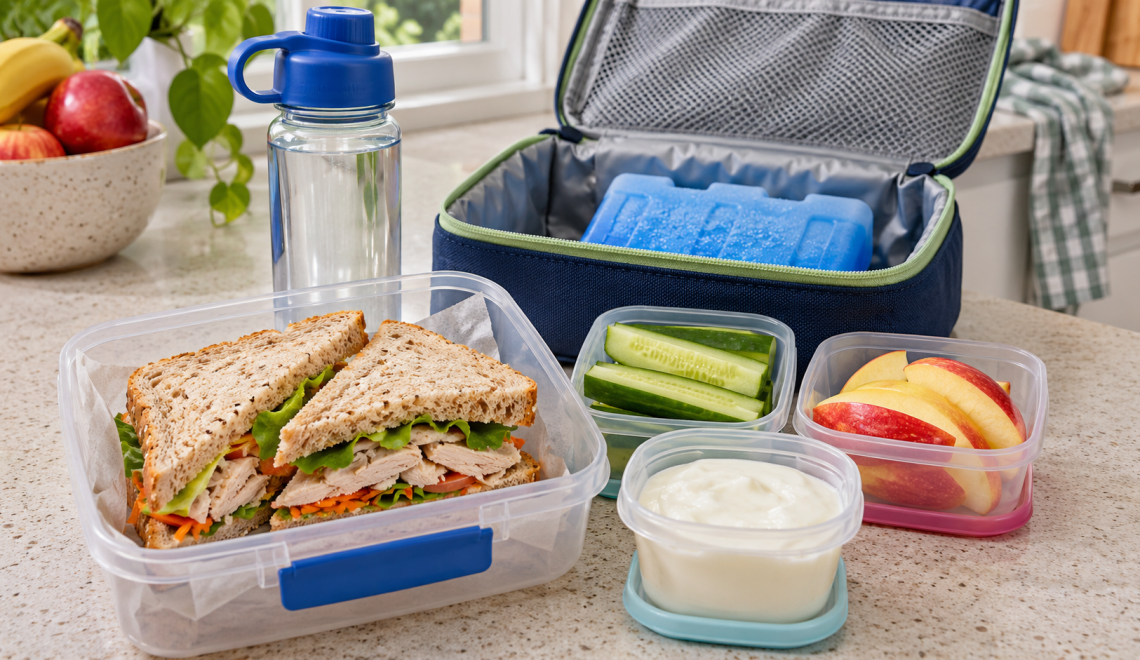
School lunch does not need to look like a carefully styled social-media post. It needs to be something your child can open, manage and eat in the time available—and something you can prepare on an ordinary weekday morning.
The end of the summer holidays is a useful time to test a few combinations, check which containers still seal and build a short list of reliable favourites. These lunchbox ideas are aimed at school-aged children; adapt ingredients, textures and portions to your child’s needs.
Use a simple mix-and-match pattern
Start with a filling main such as a sandwich, wrap or pasta. Add fruit, vegetables, a dairy food or suitable alternative, and water. Protein might come from egg, chicken, legumes, cheese or another food your child enjoys.
You do not need a different menu every day. A familiar lunch with one changing side is a workable routine. The NSW Government healthy lunchbox guide offers more ideas.
Five easy lunches to rotate
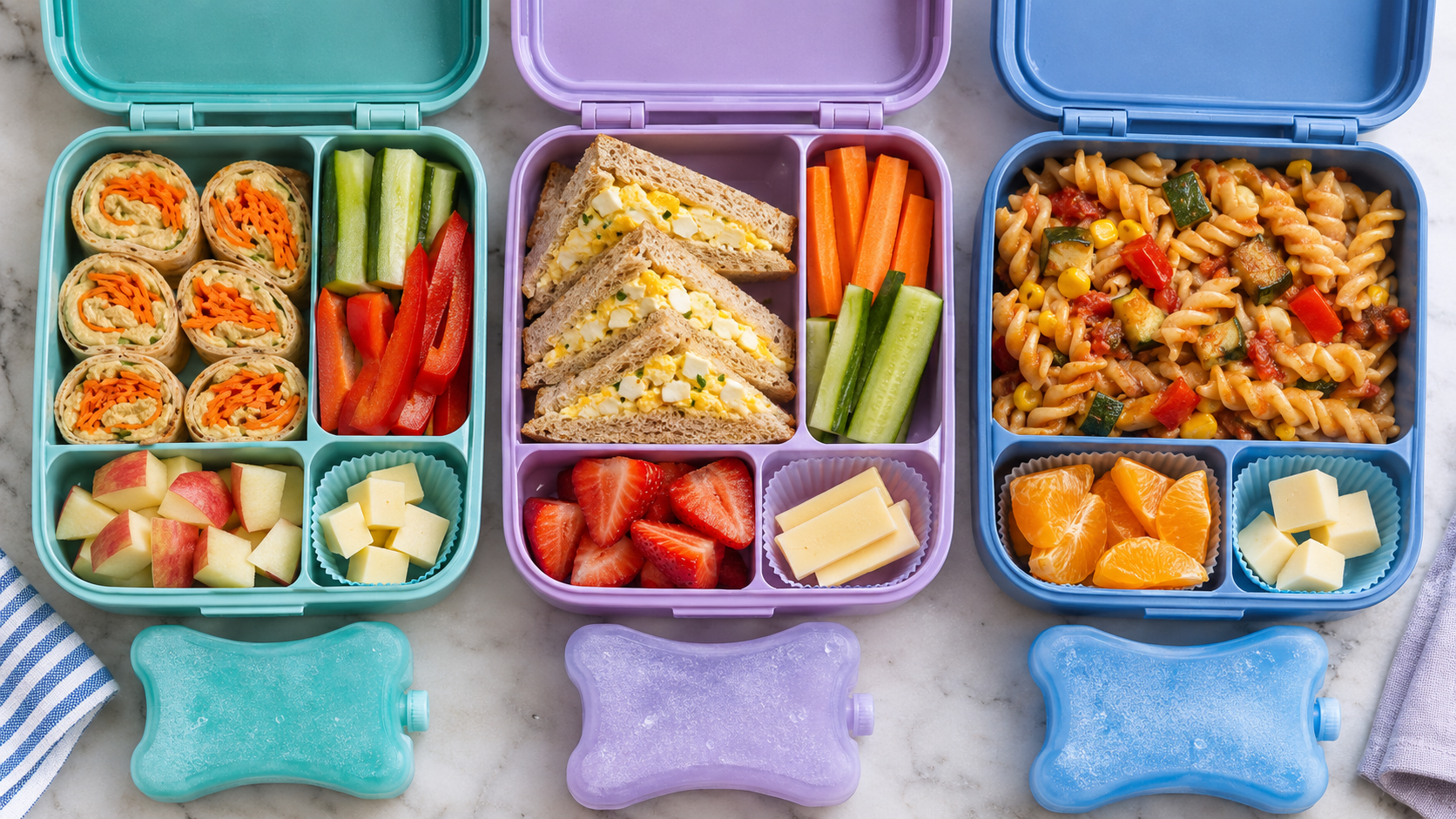
- Chicken and salad sandwich: wholegrain bread, cooked chicken and a little grated carrot, with apple slices and yoghurt.
- Hummus wrap: hummus and grated vegetables in a wrap, with a mandarin and cheese.
- Egg sandwich: mashed cooked egg on bread, cucumber on the side and a piece of fruit.
- Leftover pasta: a chilled portion of vegetable pasta, with a dairy food and fruit.
- Mix-and-match lunch: wholegrain crackers, cheese, a suitable protein food and cut vegetables in separate sections.
Choose fillings that your child already accepts and keep all perishable ingredients cold. Check labels and your school’s allergy rules; hummus commonly contains sesame, and egg, dairy and wheat are allergens too. A food being nut-free does not make it suitable for every child.
Keep the lunch cold until it is eaten
Pack food directly from the fridge into an insulated lunch bag. Place a frozen ice brick or frozen water bottle beside foods such as meat, cheese, yoghurt, egg and salads. Keep the packed bag out of direct sunlight.
Cool cooked food promptly and refrigerate it safely before packing. Do not put a warm pasta meal into a lunchbox and expect a small ice pack to cool it down. Follow NSW Food Authority lunchbox advice, and discard perishable leftovers that have not been kept safely cold.
Prepare a little, rather than everything
Wash fruit, check what is already in the fridge and choose tomorrow’s main the night before. Store prepared ingredients appropriately and pack chilled food in the morning. Keep ice bricks in a regular place in the freezer so they do not disappear just when you need them.
When you are already making dinner, consider whether a safely stored portion could become lunch. Our guide to easy family meals with pantry staples can help you plan around food you have.
Let your child practise during the holidays
Serve an at-home picnic in the actual school lunchbox. Can your child open the clips, peel the fruit and manage the water bottle? A container that leaks or needs an adult’s help can be more of a problem than a repetitive menu.
Ask which foods are easiest to eat at school. Give two choices rather than an unlimited menu: “Would you like a sandwich or a wrap?” Younger schoolchildren may also need help knowing which section is for recess.
Use the returned lunch as feedback
If the same food comes home repeatedly, talk about why. The portion may be too large, the texture may change in the box, or your child may be rushing to play. Make one adjustment at a time and avoid turning every leftover into a disagreement.
A short list of affordable lunches your child reliably eats will serve your family better than a complicated plan you cannot sustain. For shopping ideas, revisit our family pantry guide.
More summer holiday guides
Our summer family series is publishing from 16–21 January 2027. Links become available as each article is published.
- Rainy Day Activities for Kids During the Summer Holidays — 16 January
- How to Keep Babies and Toddlers Cool During Summer — 17 January
- Best Family-Friendly Beaches in Sydney’s Eastern Suburbs — 18 January
- What to Pack for a Family Beach Day With Babies and Toddlers — 19 January
- Free and Low-Cost School Holiday Activities for Kids — 21 January


