

School lunches to pack, hungry kids after school, last-minute dinner plans and those days when getting to the supermarket just isn’t happening. A well-stocked family pantry can make everyday life a whole lot easier. And with a little planning, you can save money, reduce food waste and even have enough essentials on hand if an unexpected emergency comes along.
For busy mums and families in Sydney’s Eastern Suburbs, keeping the pantry stocked isn’t about filling cupboards with food you might never use. It’s about having the right ingredients available when you need them, knowing what’s already in your kitchen and making sure nothing gets forgotten at the back of the cupboard.
The good news? You don’t need a huge pantry, an expensive shopping trip or a separate emergency food supply. A few simple habits can make all the difference.
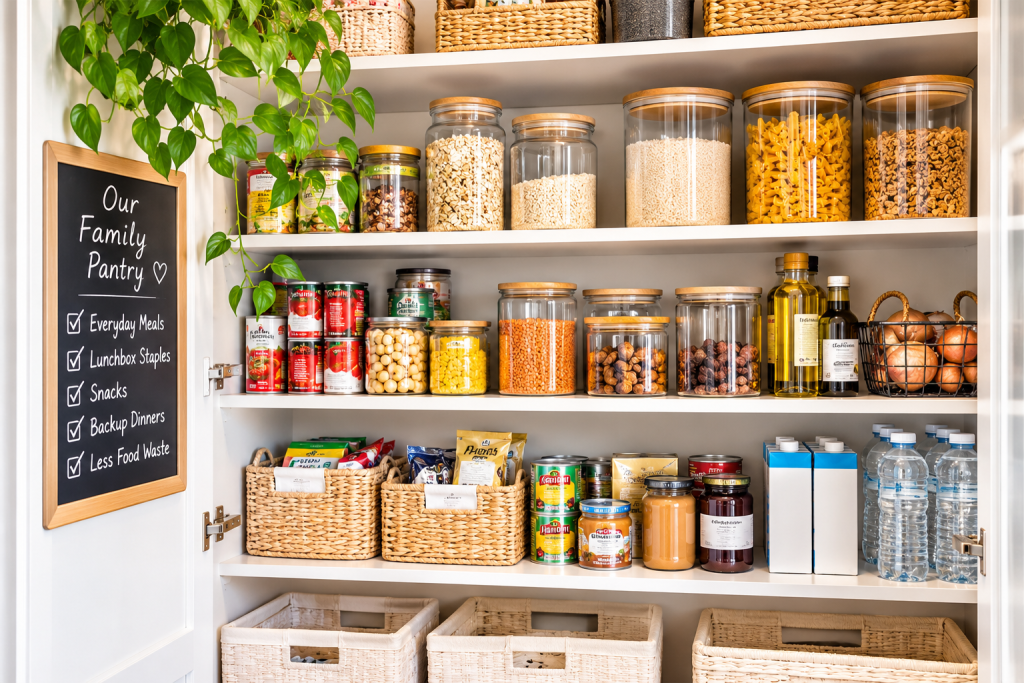
1. Create a Family Pantry That Works for Everyday Life
Think about the foods your family regularly eats. What do the kids reach for after school? What ingredients do you use for quick dinners? What are the things you always seem to run out of?
These are the products worth keeping a little extra of.
Some useful family pantry staples include:
- Breakfast essentials: Oats, cereal, long-life milk and spreads.
- Lunchbox favourites: Crackers, rice cakes, dried fruit and other shelf-stable snacks.
- Easy dinner ingredients: Pasta, rice, canned tomatoes, beans, lentils and canned tuna.
- Quick meal extras: Pasta sauces, stock, noodles and canned vegetables.
- Healthy snacks: Nuts (where age-appropriate), dried fruit, crispbread and popcorn kernels.
- Everyday basics: Cooking oil, flour, sugar, peanut butter and other family favourites.
The trick is to stock what your family actually enjoys eating, rather than buying things simply because they have a long shelf life.
There’s little point keeping ten cans of chickpeas if nobody in your household likes chickpeas!
2. Follow the Two-in-the-Cupboard Rule
One of the easiest ways to avoid running out of everyday essentials is to keep a spare of the products you use most frequently.
For example, instead of buying one packet of pasta, keep two. When you open the second packet, add pasta to your shopping list.
The same approach works for rice, cereal, canned tomatoes, long-life milk and other family favourites.
You don’t need to double everything. Start with the five or ten items your household goes through most regularly.
This simple system means you’re less likely to discover you’re out of pasta sauce halfway through cooking dinner or that there’s no cereal left on a busy school morning.
It can also reduce those last-minute trips to the supermarket, where you often end up buying more than you originally intended.
3. Save Money by Stocking Up When Groceries Are on Special
One of the biggest advantages of having a well-organised family pantry is being able to take advantage of supermarket specials.
Instead of waiting until you’ve run out of something and paying full price, keep an eye out for discounts on products your family regularly uses.
For example, if your favourite pasta sauce, cereal, canned tomatoes or peanut butter is half price at Coles or Woolworths, consider buying two or three extra while they’re on special.
Over time, these small savings can make a noticeable difference to the family grocery budget.
A few smart shopping habits can help:
- Buy extra when prices are low: Focus on pantry staples your family uses regularly.
- Look for half-price specials: Supermarket catalogues and apps can help you plan purchases around weekly promotions.
- Compare unit prices: A larger packet or a special offer isn’t always the cheapest option. Check the price per 100g or per litre.
- Check expiry dates: Only stock up on quantities you’re confident your family will use before the food spoils.
- Avoid buying things just because they’re discounted: A bargain isn’t really a bargain if it ends up in the bin.
- Keep your pantry organised: Put newly purchased items behind older products so you use what you already have first.
Here’s a simple example: If your family uses one $4 packet of cereal each week and you buy four packets when they’re half price, you’ll save $8 over four weeks.
The key is to buy more of what you already use when it’s cheaper, rather than buying more food overall.
This way, your pantry becomes a practical money-saving tool, helping you spend less on groceries while keeping the family stocked with everyday essentials.
4. Rotate Your Groceries So Nothing Goes to Waste
A well-stocked pantry should be a pantry that gets used.
One of the biggest mistakes families make is buying extra groceries, putting them at the back of the cupboard and forgetting about them until they’re well past their best.
Instead, use a simple first in, first out system.
When you unpack your groceries, move older products to the front and place newer purchases behind them.
This encourages everyone in the family to use the older products first.
It’s also worth understanding the difference between food labels:
- Best before: Food may still be safe to eat after this date if stored correctly, although its quality may have declined.
- Use by: Food should not be eaten after this date, even if it looks or smells fine.
Every few weeks, take a quick look through your pantry and plan a meal around ingredients that need using.
A can of beans, some rice and leftover vegetables could become an easy family dinner instead of forgotten food.
5. Have a Few Backup Family Meals Ready
Every family has those evenings when dinner plans fall apart.
Perhaps the kids have activities running late, you’ve forgotten to defrost something or you’re simply too tired to cook a complicated meal.
Keeping ingredients for three or four easy backup dinners can be a lifesaver.
Here are a few ideas:
Pasta night: Pasta, canned tomatoes, herbs and canned tuna or beans.
Quick fried rice: Rice, frozen vegetables and eggs, if available.
Bean and vegetable wraps: Canned beans, wraps, salsa and any fresh vegetables you have.
Easy noodle bowls: Noodles, stock, vegetables and a protein of your choice.
Simple lentil soup: Canned lentils, tomatoes, stock and seasonings.
Choose meals that suit your family’s tastes and dietary requirements. The aim is to have ingredients available for a proper meal without needing another supermarket trip.
For an extra level of preparedness, keep a couple of meal options that don’t require cooking at all.
6. Make Your Freezer Work Just as Hard as Your Pantry
Your freezer can be one of the most useful tools for reducing food waste and saving time.
Instead of throwing away food that won’t be eaten in time, freeze it while it’s still fresh and safe.
Some family-friendly freezer habits include:
- Freeze leftover dinner portions for another night.
- Keep sliced bread in the freezer for school lunches and toast.
- Freeze ripe bananas for smoothies or baking.
- Store extra portions of homemade pasta sauce, soups and casseroles.
- Keep frozen vegetables available for quick meals.
Label containers with the contents and date so you know what you’ve stored.
A good idea is to have a regular freezer dinner night, when the family eats meals made from ingredients already in the freezer.
It’s an easy way to clear space, avoid waste and save on groceries.
7. Keep a Simple Pantry Shopping List
You don’t need a complicated spreadsheet to manage your household groceries.
A shopping list on your phone, a magnetic notepad on the fridge or a shared family shopping app can work perfectly well.
The important thing is to add items as soon as you open your last packet or notice you’re running low.
Before heading to the supermarket, quickly check your pantry, fridge and freezer.
This helps prevent buying a third jar of peanut butter when there are already two hiding in the cupboard.
You can also use your shopping list to plan ahead for supermarket specials. If you know your family regularly uses a particular product, watch for discounts and buy a few extras when the price is right.
For families trying to manage rising grocery bills, knowing what you already have is one of the simplest ways to avoid unnecessary spending.
8. Keep Enough Essentials for a Few Unexpected Days at Home
There’s another advantage to maintaining a well-stocked family pantry: it can help your household cope with unexpected situations.
A child might become sick, you might not be able to get to the shops, severe weather could disrupt normal routines or a temporary power outage could make cooking difficult.
In more serious emergencies, households may need to manage without access to shops, electricity or running water for a period of time.
Australian emergency preparedness guidance commonly recommends being ready to manage independently for at least 72 hours.
The good news is that much of your everyday pantry can form part of this preparation.
Consider keeping:
- Enough shelf-stable food for your household for three days.
- Drinking water, with 3 litres per person per day as a useful planning allowance.
- A few foods that can be eaten without cooking.
- Any essential baby formula, nappies, medications or other household-specific supplies.
- A manual can opener if you store canned food.
For a family of four, three litres of drinking water per person per day means 36 litres for three days.
Remember that this is a planning allowance, and additional water may be needed for hygiene, pets or hot weather.
Unlike a separate emergency food box that might sit untouched for years, a rotating pantry means you’re regularly using and replacing the food.
The important exception is drinking water and any other dedicated emergency essentials, which should be stored safely and checked regularly.
9. Check Your Pantry Twice a Year
A family pantry doesn’t need constant organising, but a proper check twice a year is a good habit.
You could make it part of your autumn and spring household routines or schedule it around the start of daylight saving time.
During your pantry check:
- Look for products approaching their best-before dates.
- Check whether you have enough of your everyday staples.
- Remove damaged packaging and inspect for pantry pests.
- Review what’s in your freezer.
- Check stored drinking water and emergency essentials.
- Plan meals using ingredients that have been sitting in the cupboard for a while.
You might even discover enough ingredients to avoid a major grocery shop that week.
10. What If the Power Goes Out?
Sydney families are no strangers to occasional storms and power interruptions.
A well-organised kitchen can help, but it’s important to know how to keep food safe if the electricity goes off.
Keep fridge and freezer doors closed as much as possible.
As a general guide, an unopened refrigerator can keep food cold for around four hours. A full freezer may maintain safe temperatures for approximately 48 hours, while a half-full freezer may last around 24 hours.
A fridge thermometer is a useful addition to your kitchen because it helps you monitor temperatures. Ideally, your refrigerator should be kept at 5°C or below.
If a power outage lasts longer than expected, follow official food safety guidance before eating refrigerated or frozen food. Don’t rely on smell or appearance alone to decide whether perishable food is safe.
Your shelf-stable pantry supplies can then become especially useful, particularly if you have foods that don’t require cooking.
Check How Long a Power Outage Is Expected to Last
If the electricity goes out, one of the first things you’ll probably want to know is how long it will take to come back on.
For families living in Sydney’s Eastern Suburbs, Ausgrid provides an online power outage map where you can check reported outages in your neighbourhood.
Simply enter your suburb or address to see whether an outage has been reported, which areas are affected and the estimated restoration time, when available.
Check the Ausgrid Live Power Outage Map.
Keep in mind that restoration times are estimates and can change as repair crews investigate the problem.
It’s worth saving this link on your phone so you can quickly access it during a power outage.
11. Teach the Kids How the Family Pantry Works
Keeping the pantry organised doesn’t have to be Mum’s job alone.
Children can learn simple habits that make a difference, such as putting newer groceries behind older ones, checking what is already available before opening something new and letting someone know when they’re using the last of a favourite item.
Older children can help write shopping lists, check dates and suggest meals using ingredients already at home.
It’s a practical way to teach children about food waste, budgeting and being organised.
And who knows? You might even find someone else volunteering to unpack the groceries.
A Well-Stocked Pantry Is About Convenience, Not Stockpiling
You don’t need cupboards overflowing with groceries or a separate room dedicated to emergency supplies.
For most families, the goal is simply to have enough of the right foods available to make everyday life easier.
By keeping a few extras of the products you already use, taking advantage of supermarket specials, rotating your supplies, making good use of your freezer and planning easy backup meals, you can reduce unnecessary supermarket trips, save money and throw away less food.
And as an added benefit, your household will be better prepared if something unexpected happens.
A little organisation in the kitchen today can mean fewer stressful dinners, less food waste, lower grocery bills and one less thing for busy mums to worry about tomorrow.
10 Easy Family Meals You Can Make with Pantry Staples During the School Holidays


