
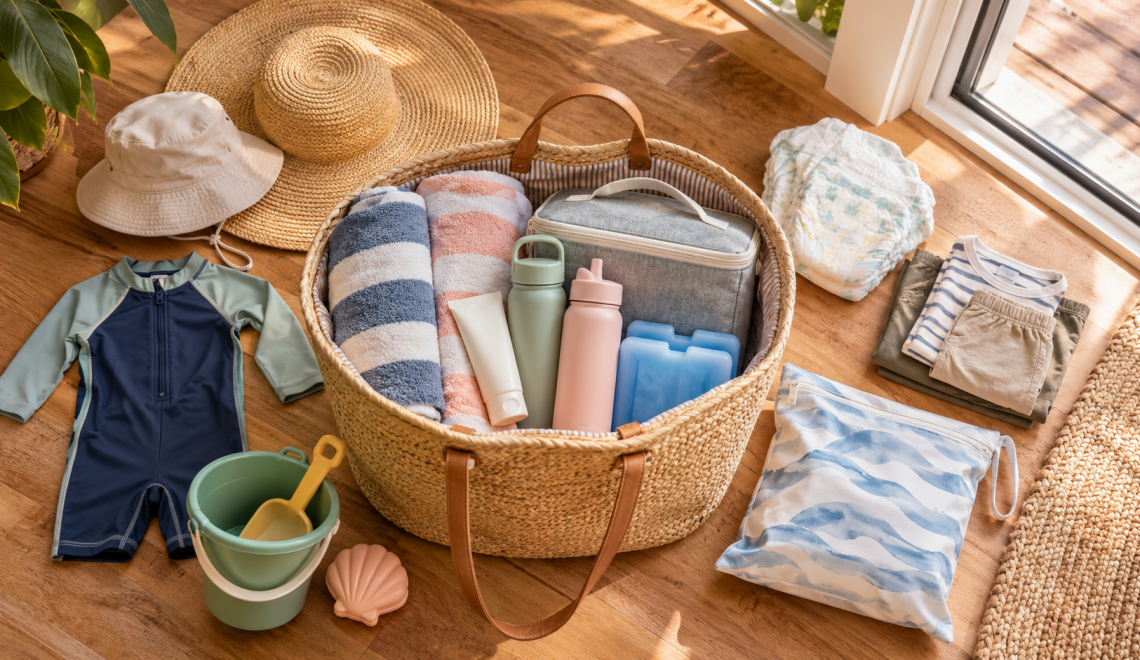
A beach outing with a baby or toddler can feel like moving house for two hours. The trick is to pack around what your family will actually need: shade, feeds, drinks, dry clothes and a safe way to get everyone home.
Use this family beach packing list as a starting point, then shorten it for a quick visit. Packing fewer toys and organising essentials into small pouches can make the walk from the car or bus stop much easier.
Start with the outing, not the bag
Before you pack, check beach closures, water quality, weather and the day’s UV forecast. Look at the walk to the sand, the nearest toilets and whether your pram will manage the route. A short visit close to home may be more enjoyable than a full-day expedition.
Choose a time that works around feeds and naps, with a clear plan to leave if it becomes too hot. A beach shade shelter does not turn an extreme-heat day into a suitable baby outing.
Pack sun protection for everyone
- Broad-brimmed or legionnaire-style hats.
- Protective clothing, including rash shirts for children going into the water.
- Suitable sunscreen for exposed skin, following age guidance and the label.
- Sunglasses where practical.
- A stable shade option that allows ventilation and is permitted at the location.
- Footwear for hot paths and sand.
Cancer Council recommends shade, hats and clothing as key protection for babies. For children under six months, ask a pharmacist or doctor about sunscreen on skin you cannot cover. Check Cancer Council’s sunscreen advice. Never cover a pram with a dry wrap or towel to create shade.
Put feeding and drinks in their own section
Bring what you normally need for your baby’s feeds and plan how you will keep equipment clean and store milk safely. Follow the preparation and storage instructions for your usual feeding method rather than improvising on the sand.
Pack water for adults and older children, plus age-appropriate snacks. Breastfed babies under six months do not need extra water; they may need more frequent feeds in hot weather. Never dilute formula.
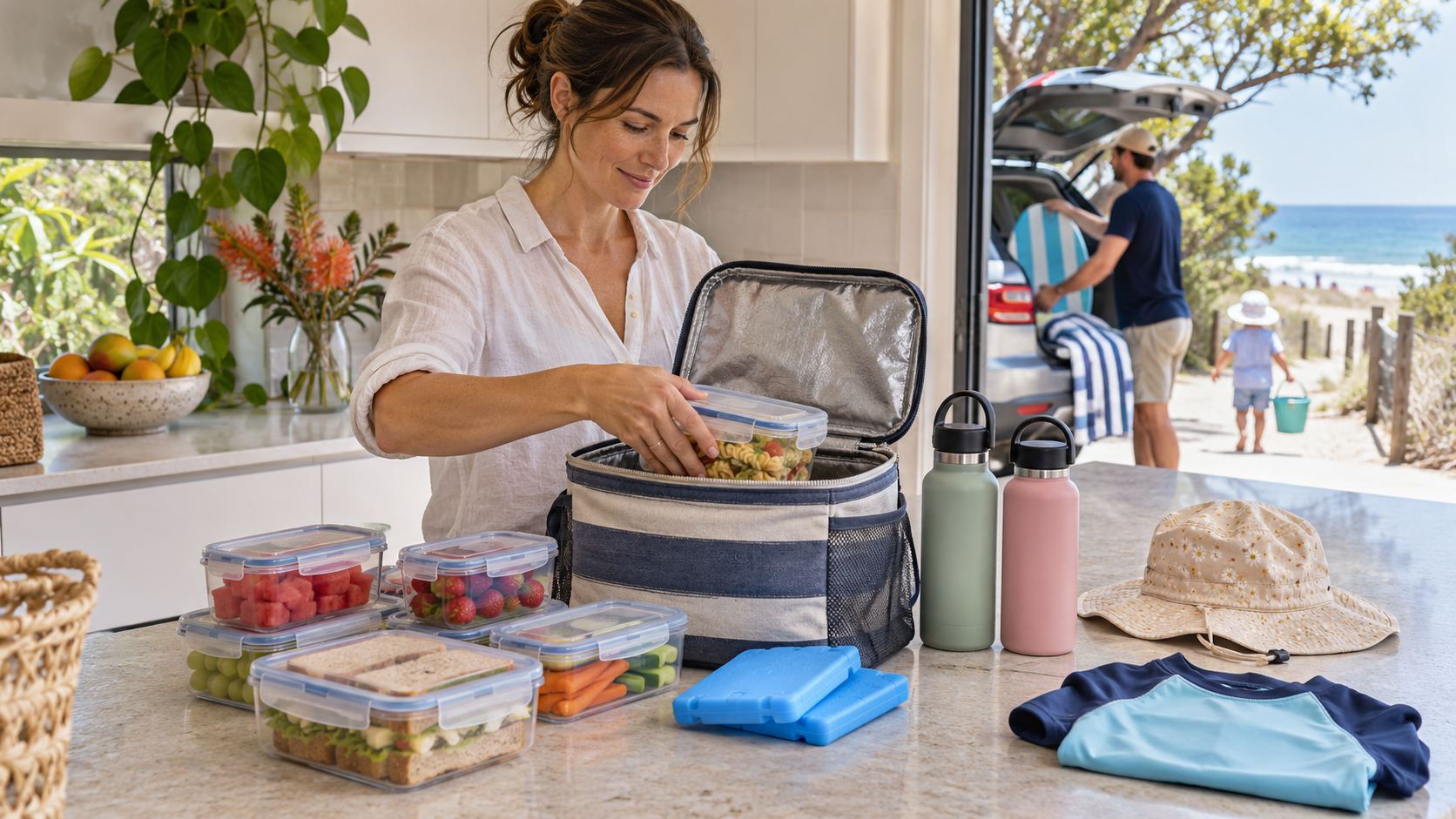
Use an insulated bag with frozen ice packs for food that needs to stay cold. Pack it last, keep it shaded and minimise repeated opening. The NSW Food Authority’s lunchbox guidance also applies to packed outing food.
Bring a small changing kit
- Nappies, wipes and your usual changing essentials.
- A portable change mat.
- A full dry outfit for each child.
- One towel per child and a spare lightweight layer.
- A wet bag for damp clothing and a separate rubbish bag.
- Any prescribed medicines your child needs, stored as directed.
Keep one clean outfit separate from the rest so it stays dry. A spare top for the adult carrying the baby can earn its place in the bag too.
Keep the toy selection small
A bucket, a sturdy scoop and one favourite sand toy are often enough. Leave tiny toys at home and take everything away with you. Toys and flotation aids do not replace supervision or make a child safe in the water.
Agree on supervision before anyone swims
Young children need an adult within arm’s reach around water. Name the supervising adult, put phones away and make handovers explicit. If that adult needs to feed a baby or pack lunch, another capable adult must take over—or everyone comes out of the water.
At surf beaches, swim between the flags during patrol hours and follow lifeguard directions. Keep toddlers away from slippery rocks and unexpected waves.
The five-minute check before leaving home
Check hats, feeds, water, ice packs, nappies, dry clothes and keys. Then ask whether the plan still suits the weather and everyone’s energy. You can always choose a shady picnic instead; our guide to picnic spots in Sydney’s east and city has more ideas.
More summer holiday guides
Our summer family series is publishing from 16–21 January 2027. Links become available as each article is published.
- Rainy Day Activities for Kids During the Summer Holidays — 16 January
- How to Keep Babies and Toddlers Cool During Summer — 17 January
- Best Family-Friendly Beaches in Sydney’s Eastern Suburbs — 18 January
- Healthy and Easy School Lunchbox Ideas for Busy Parents — 20 January
- Free and Low-Cost School Holiday Activities for Kids — 21 January


