
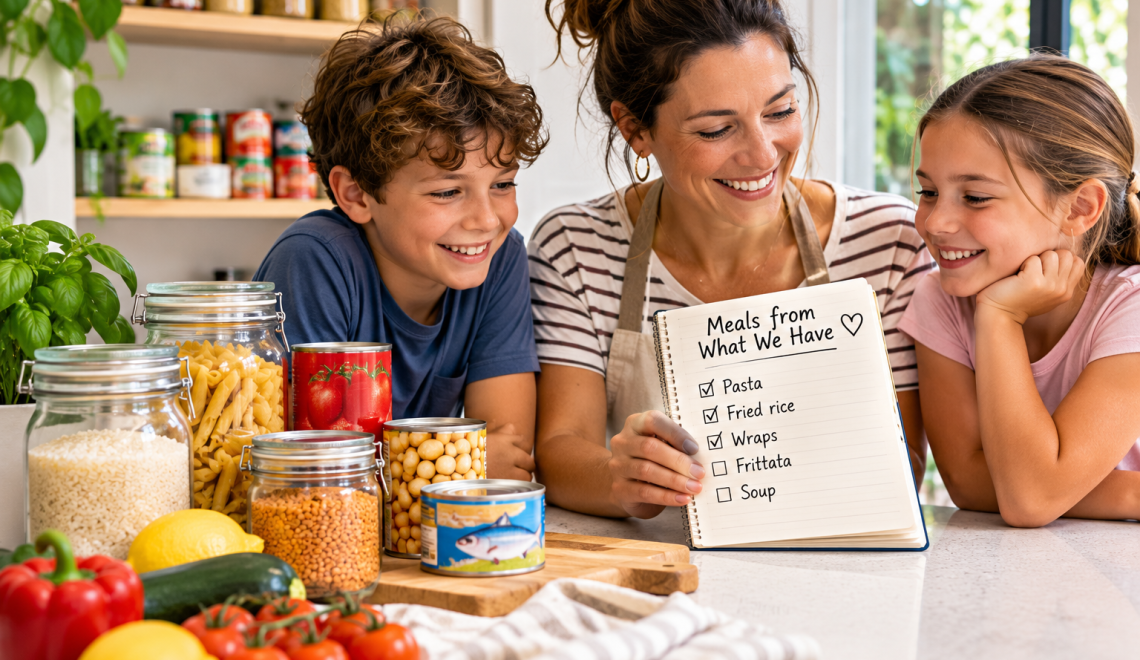
It’s that strange week between Christmas and New Year when nobody quite knows what day it is, the kids are constantly hungry and another supermarket trip is the last thing you feel like doing. Before heading to the shops, take a look at what you already have. You might be surprised how many meals are hiding in your kitchen.
For busy families, learning to cook with ingredients already available can save money, reduce food waste and make school holiday meals much easier.
Here’s how to turn your pantry, fridge and freezer into several days of simple family meals.
1. Start with a Kitchen Inventory
Before planning dinner, check your pantry, fridge and freezer.
Write down the ingredients you already have, particularly anything that needs to be used soon.
You might discover half a packet of pasta, frozen vegetables, canned beans, eggs and a few potatoes.
Together, these ingredients could form the basis of several meals.
2. Build Meals Around What Needs Using First
Fresh vegetables, ripe fruit and safely stored leftovers should generally be prioritised over unopened pantry products with a long shelf life.
For example:
- Soft tomatoes can become pasta sauce.
- Vegetables can be added to soup or fried rice.
- Ripe bananas can become banana bread or smoothies.
- Leftover cooked chicken can be used in wraps or salads.
Always check that food has been stored safely before using it.
3. Try a Pantry Pasta Night
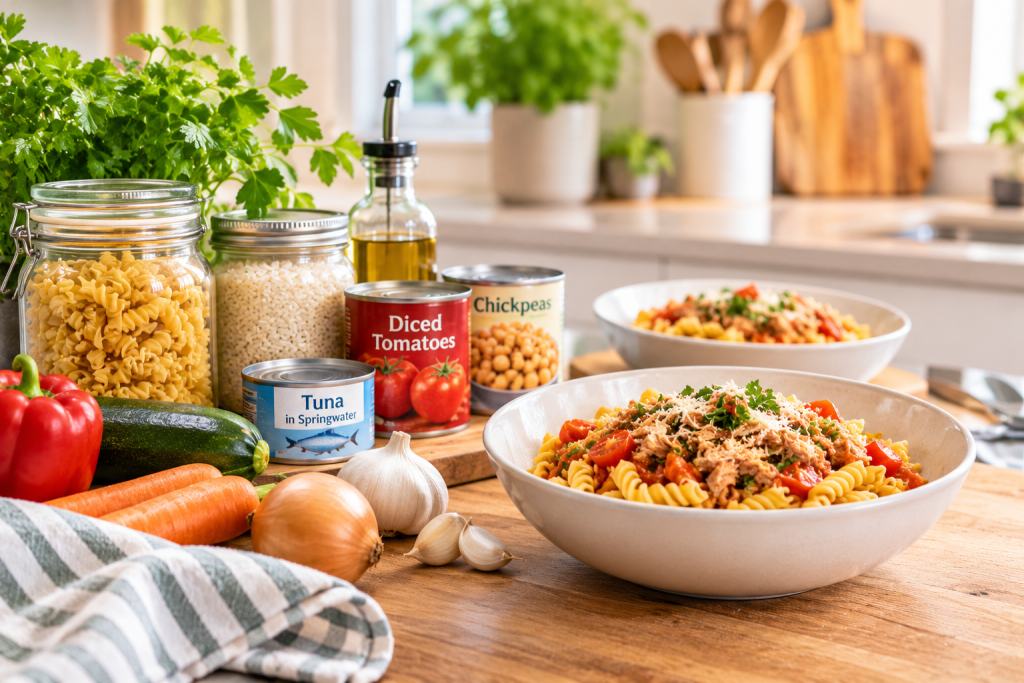
Pasta is one of the most versatile ingredients to keep in the cupboard.
Combine it with canned tomatoes, tuna, beans or frozen vegetables.
A little olive oil, garlic and herbs can turn simple ingredients into a family dinner.
4. Make a Family Frittata
Eggs are useful for turning small quantities of vegetables into a complete meal.
Combine eggs with cooked potatoes, vegetables and cheese, then cook until fully set.
Serve with toast or salad.
5. Turn Leftovers into Wraps or Toasties
Wraps and bread are useful for quick meals.
Fill them with safely stored leftover cooked meat, vegetables, cheese or beans.
This is particularly helpful when everyone wants something different for lunch.
6. Have a Freezer Discovery Dinner
Choose one evening to use up older frozen meals and ingredients.
You might have enough for a mix-and-match family dinner, with soup for one person, pasta for another and a frozen casserole for everyone else.
It’s a practical way to clear freezer space without wasting food.
7. Challenge the Family to Create a Meal
Older children can help choose ingredients and suggest recipes.
Give them a few ingredients and ask what they could make.
It’s a fun way to encourage creativity and teach practical cooking skills.
Younger children can help wash vegetables, mix ingredients and set the table.
8. Keep a Small Collection of Emergency Dinner Ingredients
Some ingredients are particularly useful to have available when you don’t want to shop.
Pasta, rice, canned tomatoes, beans, lentils, tuna, wraps and frozen vegetables can be combined into dozens of meals.
For tips on building a pantry that saves money and reduces waste, read The Family Pantry: How to Always Have Food on Hand Without Wasting Money or Groceries.
Replace with the published article URL.
Make the Most of What You Have
Not every family meal needs a new shopping list.
Sometimes the easiest way to save money is to stop buying more groceries for a day or two and use what you’ve already purchased.
It’s a simple habit that can make a real difference to the family budget, especially during the long summer holidays.
The Family Pantry: How to Always Have Food on Hand Without Wasting Money or Groceries


