
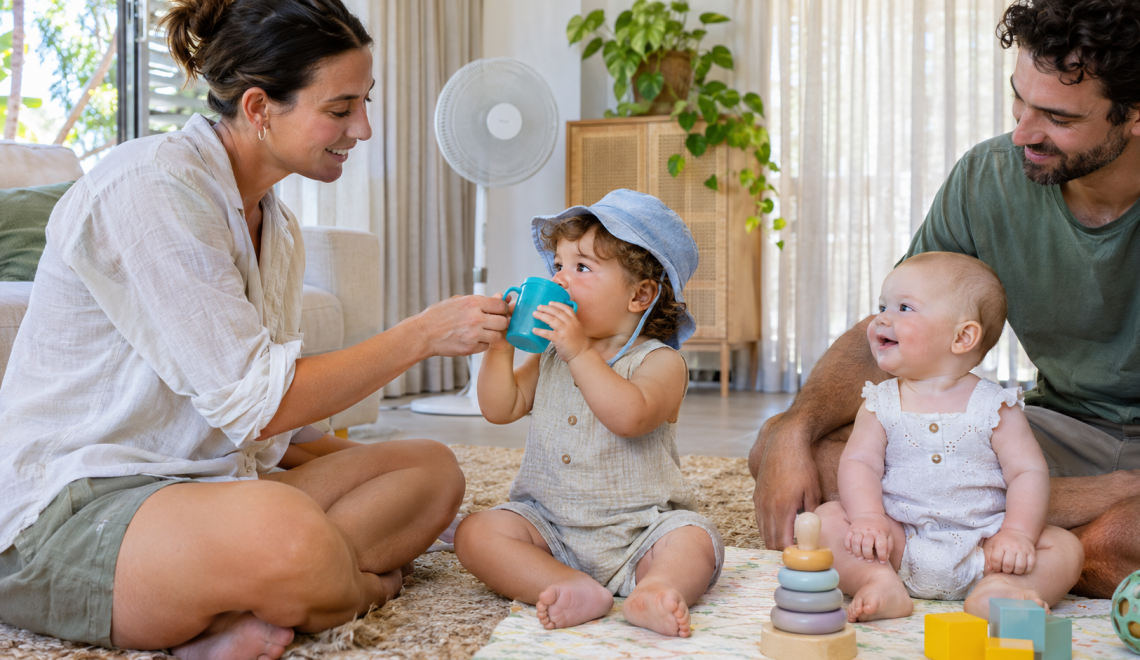
Summer with little ones often means planning around feeds, naps and the hottest part of the day. A short walk can feel very different when you are pushing a pram, carrying a baby and persuading a toddler to keep their hat on.
Babies and young children are more vulnerable to overheating than adults. The aim is to reduce heat exposure, offer age-appropriate drinks or feeds and notice changes early. You do not need to fill every holiday day with an outing.
Plan the day around a cool place
Check the weather before leaving home and shorten outdoor plans on hot days. An early outing followed by indoor play may work better than a long day in the sun. During extreme heat, choose an air-conditioned space where possible.
At home, close blinds against direct sun and use light clothing. Keep fans and cords safely out of reach. A damp face washer can help a child feel more comfortable. Follow NSW Health’s advice for babies and young children in hot weather.
Keep feeds and drinks age appropriate
Babies under six months may need more frequent breastfeeds or formula feeds in hot weather. Breastfed babies do not need extra water. Prepare formula exactly as directed—never dilute it to provide extra fluid. Ask your child health nurse or doctor if you are unsure about your baby’s feeding needs.
Offer older babies and toddlers water regularly alongside their usual feeds and meals. Have their cup ready before you settle into play, and remember to drink regularly yourself.
Shade is essential, but airflow matters too
Never drape a dry blanket or wrap over a pram to block sunlight. It can trap heat and restrict airflow. Use the pram’s shade canopy while keeping ventilation clear, check your child frequently and avoid using a hot pram as a sleeping space.
Never leave a baby or child alone in a parked car, even briefly. A quick errand is not an exception.
Use several forms of sun protection
Heat and ultraviolet radiation are different hazards: a breeze or cloud cover does not tell you whether UV is low. Check the day’s UV forecast as well as the temperature.
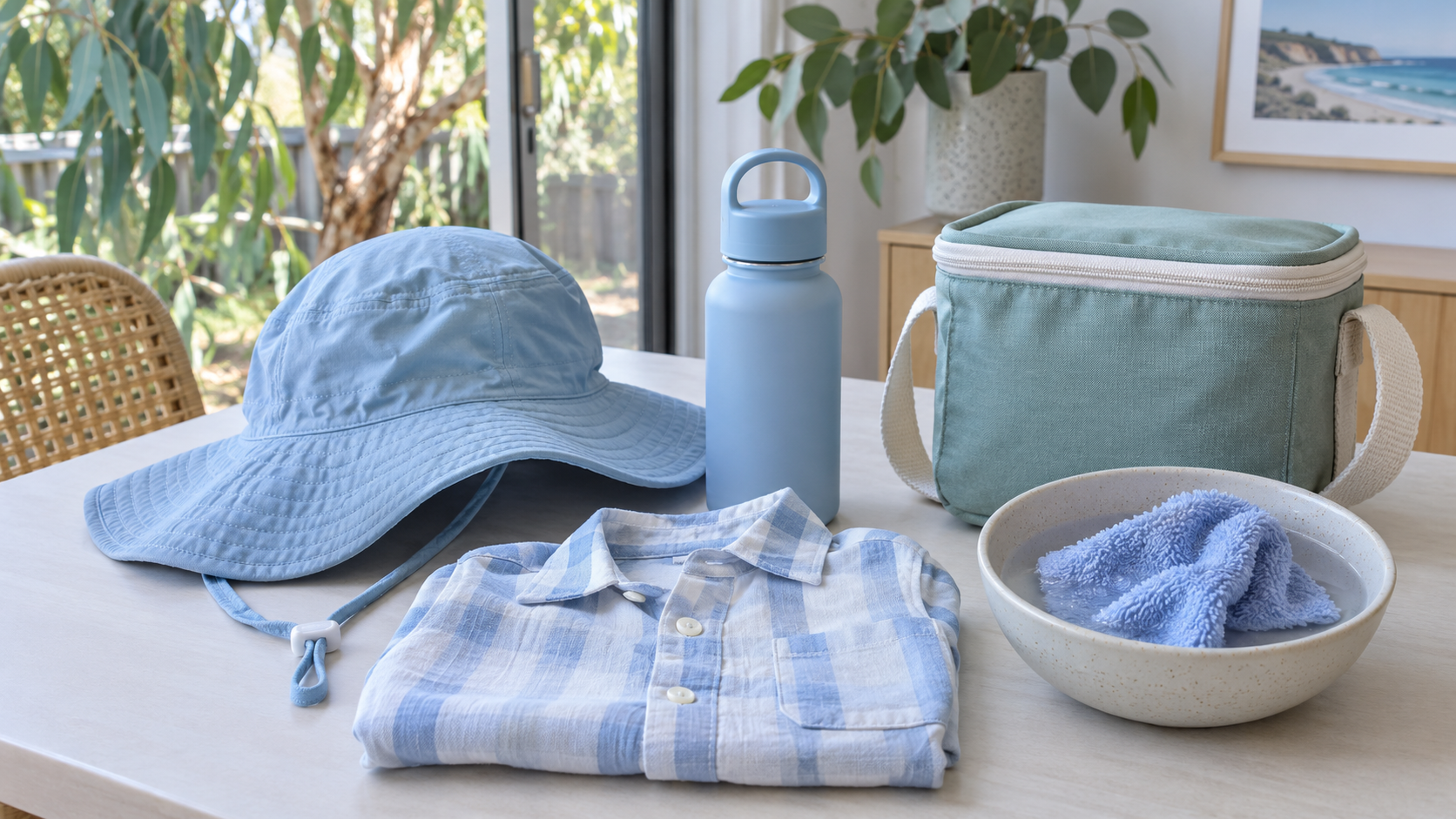
Cancer Council NSW recommends keeping children under 12 months out of direct sunlight when UV levels are 3 or above. Prioritise shade, protective clothing and a suitable hat. For babies under six months, minimise sunscreen use and ask a pharmacist or doctor about protecting any skin that cannot be covered. See Cancer Council’s guidance for babies and children.
Keep sleep spaces safe
Do not add pillows, cooling pads, loose wet cloths or extra bedding to a baby’s cot. Maintain a clear sleep space with a firm, flat mattress and follow safe-sleep guidance. If you are worried about your baby’s comfort, seek individual advice rather than adding an unfamiliar cooling product.
Know when to get help
Fewer wet nappies, darker urine or a dry mouth can signal dehydration. If you are concerned, contact your doctor or healthdirect on 1800 022 222.
Call Triple Zero (000) for an ambulance if your child is floppy, very drowsy, confused, unconscious or showing signs of severe heat-related illness. Move them out of the heat and follow the operator’s instructions. The Sydney Children’s Hospitals Network heat-illness factsheet explains warning signs and first aid.
Give yourself an easier summer routine
Pack essentials before bedtime, keep a cool indoor option in mind and be willing to cancel. For a gentle indoor outing, our Eastgardens Library guide offers a starting point; check opening hours before travelling.
This is general information, not a diagnosis or individual treatment plan. Seek medical advice if your child is unwell or you are concerned.
More summer holiday guides
Our summer family series is publishing from 16–21 January 2027. Links become available as each article is published.
- Rainy Day Activities for Kids During the Summer Holidays — 16 January
- Best Family-Friendly Beaches in Sydney’s Eastern Suburbs — 18 January
- What to Pack for a Family Beach Day With Babies and Toddlers — 19 January
- Healthy and Easy School Lunchbox Ideas for Busy Parents — 20 January
- Free and Low-Cost School Holiday Activities for Kids — 21 January


