
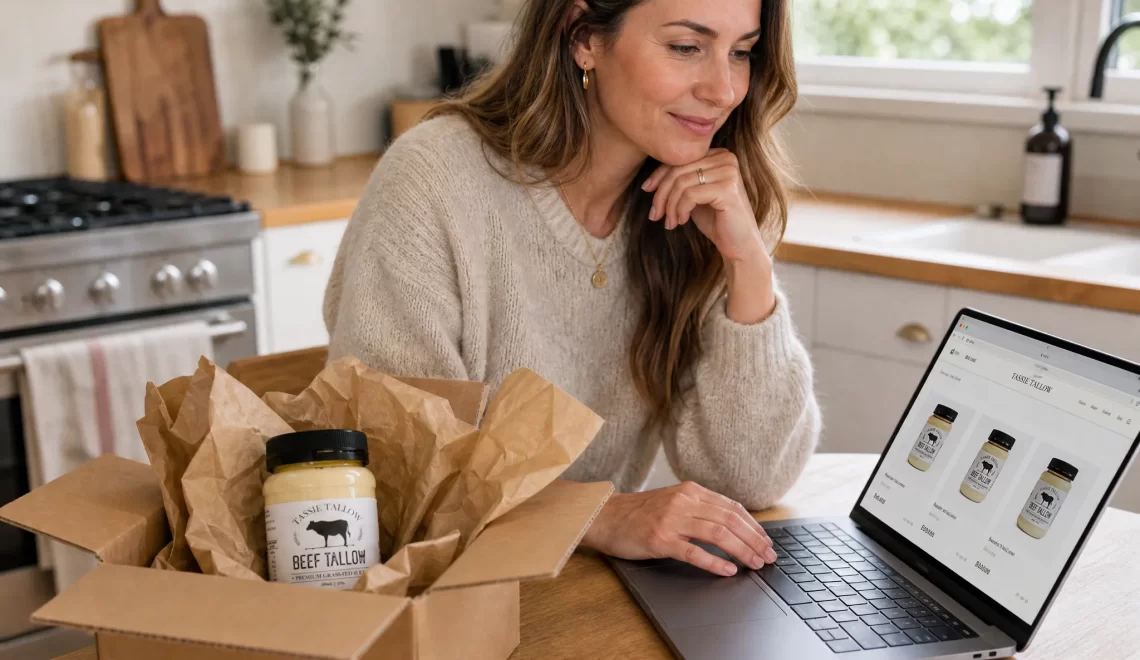
Once dismissed as an old-fashioned ingredient belonging in grandma’s kitchen, tallow is making an extraordinary comeback, with growing numbers of consumers using rendered animal fats in everything from cooking to moisturisers, balms and soaps.
The resurgence is being fuelled in part by interest in traditional foods, minimalist skincare and products with shorter, more recognisable ingredient lists. Tallow skincare in particular has become a major social media trend, although scientific research into its benefits for human skin remains limited.
But long before tallow became a social media phenomenon, Tasmanian business Tassie Tallow was rendering it. Established in 2012, Tassie Tallow has spent 14 years working with traditional animal fats and today produces an extensive range spanning beef tallow, lamb and duck fats, lard and ghee through to tallow moisturisers, balms, soaps and lip products.
Tassie Tallow co-owner and director, Julian Czaplinski said the change in consumer attitudes had been extraordinary.
“When we started, tallow wasn’t trendy. In fact, most people thought animal fat was something from another generation that had been replaced by modern products,” Czaplinski said.
“Now people are actively seeking it out. Demand for our products is soaring from not only across Australia but overseas as well.
“We are seeing consumers questioning long ingredient lists and looking for products that are simpler and closer to ingredients they understand. Tallow has gone from something people had almost forgotten existed to something they are deliberately putting in their kitchens and bathrooms.”
From frying pan to face cream
Tallow is created by carefully rendering animal fat, traditionally producing a stable cooking fat that can also be formulated for other applications.
In skincare, tallow contains fatty acids including oleic and stearic acids that can have emollient and moisturising properties. Some dermatologists say formulated tallow products may help lock in moisture, particularly for dry skin, although experts also stress that tallow is not suitable for everyone and evidence supporting many of the broader claims circulating online remains limited.
Czaplinski said Tassie Tallow’s skincare customers are often looking to simplify their routines.
“Some people come to us saying they feel like they have tried everything. Their bathroom is full of products and they are tired of constantly adding another cream, serum or ingredient,” he said.
“They aren’t necessarily looking for another miracle product, often they are looking for simplicity and a solution that is naturally good for the body free of nasty ingredients.
“That is where we think the tallow movement becomes really interesting. It reflects something much bigger than a beauty trend. People increasingly want to understand what they are buying, where it comes from and why every additive and ingredient is there.”

Fourteen years before the trend
While a wave of tallow skincare brands has emerged in recent years, Tassie Tallow has been working with animal fats since 2012. Its experience extends beyond beef to lamb, pork, duck, goat, water buffalo and dairy fats.
That history, Czaplinski said, matters because not all tallow is automatically the same.
“The idea that tallow is tallow is simply not true. The raw material matters, how it is handled matters and the rendering process matters. Purity, consistency, flavour, texture and formulation matter,” he said.
“We have spent 14 years learning how different fats behave and how to produce consistently high-quality finished products. You don’t acquire that knowledge because an ingredient suddenly starts trending on social media.”
Tassie Tallow says its focus is on carefully selected fats, controlled rendering and making products with a clear purpose rather than adding unnecessary ingredients.
Its quality has also been recognised in competition. At the 2026 Sydney Royal Fine Food Show, Tassie Tallow won five of the six Gold medals awarded in its class, with seven of its eight entries receiving medals overall. Its Tasmanian paddock bred lard scored 96 points, the highest score in the class. This achievement marks over 10 years of major awards for the business and its products.
The cooking debate
Tallow’s return to Australian kitchens has also coincided with growing online debate about traditional animal fats and vegetable oils.
Czaplinski said consumers are attracted to tallow because it is a traditional cooking ingredient with a distinctive flavour and useful cooking characteristics.
“People are rediscovering the way previous generations cooked. They want to roast potatoes in tallow, cook meat with it, use duck fat or lamb dripping and understand the differences between these traditional fats,” he said.
“For us, the exciting part is seeing people become interested in the ingredient itself rather than treating every cooking fat as interchangeable.”
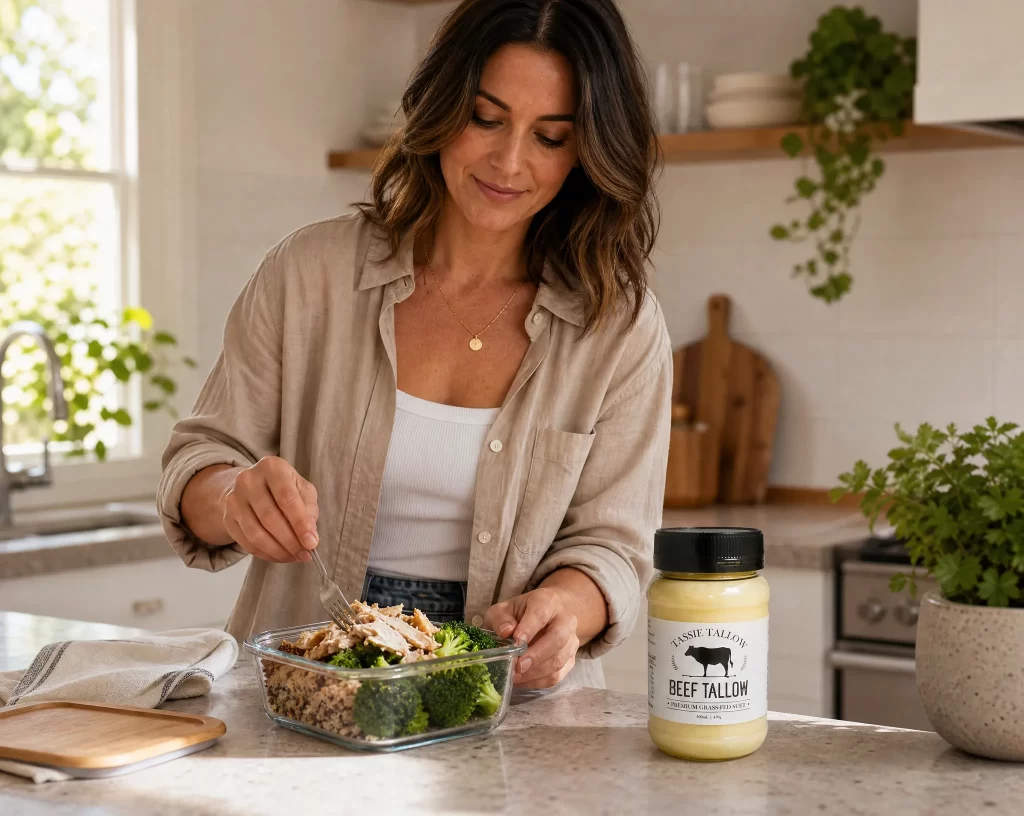
However, Tassie Tallow does not position tallow as a cure all or claim that consuming more saturated fat is inherently healthier. Australian Heart Foundation guidance recommends limiting saturated fats and favouring unsaturated fats such as olive, canola and other plant oils as part of a heart healthy eating pattern.
“We aren’t interested in making wild health claims,” Czaplinski said.
“We are interested in producing exceptionally good traditional fats and giving people the information to decide how they want to use them.
“There is enough hype in the wellness industry already. Our story is much simpler. We were rendering tallow before it was fashionable, we understand the ingredient incredibly well and we want to make it as well as we possibly can.”
From Tasmania to the world
Having grown from a small Tasmanian operation into a national brand supplying thousands of Australians, Tassie Tallow is now strengthening its operations as it prepares for further international growth.
Czaplinski believes the explosion of new tallow products will ultimately make provenance and production standards increasingly important to consumers.
“Tallow is having its moment, but eventually consumers start looking beyond the word on the front of the jar,” he said.
“They want to know where it came from, how it was made, who made it and whether that company actually understands the ingredient.
“We have been doing this for 14 years. We were here long before tallow became a hashtag and our intention is to be here long after the trend has moved on.”
About Tassie Tallow
Established in Tasmania in 2012, Tassie Tallow is an Australian producer specialising in traditional rendered animal fats for cooking and tallow-based skincare. Its food range includes beef tallow, beef and lamb dripping, lard, duck fat, ghee and specialty animal fats, while its skincare range includes tallow moisturisers, original and whipped balms, body products, soaps and lip care.
Tassie Tallow has received numerous Australian fine food awards, including five Gold medals at the 2026 Sydney Royal Fine Food Show. This achievement marks over 10 years of major awards for the business and its products.
Based in Hobart, the company supplies customers throughout Australia and New Zealand and is preparing for further international expansion. Find out more at: tassietallow.com.au


