If your child or family member has an NDIS plan, you may have come across Exercise Physiology as a possible support — but what exactly does an Exercise Physiologist do, and how could they help?
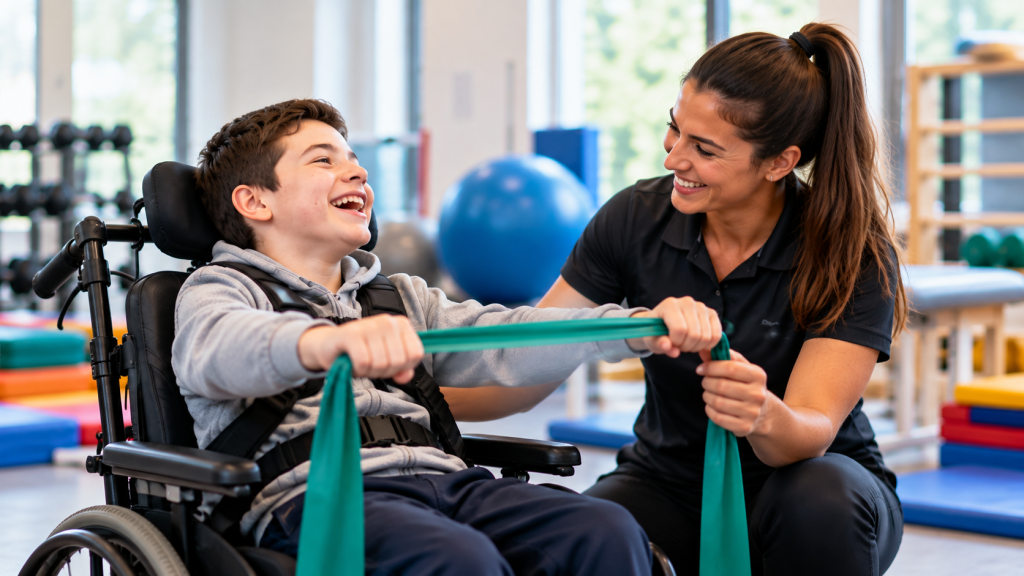
Exercise Physiology isn’t simply about getting fitter or going to the gym. For people living with disability, an Accredited Exercise Physiologist (AEP) can use evidence-based exercise and movement programs to help work towards individual functional goals, which may include improving strength, mobility, balance, endurance and independence.
For families navigating the NDIS, understanding where Exercise Physiology may fit into an NDIS plan can make it easier to have informed conversations with providers, support coordinators and other health professionals.
What is an Exercise Physiologist?
An Accredited Exercise Physiologist is a university-qualified allied health professional who specialises in using exercise as part of the management of health conditions, injuries and disabilities.
Rather than providing everyone with the same exercise routine, an Exercise Physiologist assesses the individual and develops an exercise program around their particular needs, abilities and goals.
Depending on the person, this could involve working on areas such as:
- Strength and physical capacity
- Balance and coordination
- Mobility
- Cardiovascular fitness and endurance
- Movement and functional ability
- Confidence with physical activity
- Participation in everyday activities
For someone living with disability, these improvements can potentially contribute to broader goals around independence and participation in everyday life.

How Can Exercise Physiology Work With the NDIS?
Exercise Physiology may be funded through the NDIS when the support is considered appropriate to the participant’s disability-related needs and helps them work towards their NDIS goals.
This means Exercise Physiology isn’t automatically funded simply because someone has an NDIS plan.
The important connection is between the person’s disability, functional needs, goals and the support being requested.
An Exercise Physiologist may also work alongside other members of a person’s support team, which could include physiotherapists, occupational therapists, support coordinators, doctors and other allied health professionals.
What Could an Exercise Physiology Program Look Like?
There isn’t one standard NDIS Exercise Physiology program.
A good program should be tailored to the individual.
The process will generally start with an assessment to understand the person’s current physical abilities, challenges and goals.
From there, the Exercise Physiologist can develop an appropriate program and monitor progress over time.
Depending on the provider and participant’s needs, sessions may take place in a clinic, gym, home or community environment, with some providers also offering telehealth services.
The activities themselves will depend on what the participant is working towards.
For one person, that might mean improving balance and leg strength. For another, it could involve increasing stamina so they can participate more comfortably in community activities.
Choosing an Exercise Physiologist
Finding the right provider is important, particularly when working with children, teenagers or someone who requires additional support.
Before choosing an Exercise Physiologist, families may want to consider:
Are they appropriately qualified?
Look for an Accredited Exercise Physiologist (AEP) and check their professional credentials.
Do they have experience with disability and the NDIS?
NDIS participants can have very different needs, so relevant experience can be important.
Do they understand the participant’s goals?
The program should connect with what the individual actually wants and needs to achieve rather than simply focusing on general fitness.
How will progress be measured?
Ask how the provider assesses the participant at the beginning and how improvements or changes will be monitored.
Can they communicate with the broader support team?
Depending on the participant’s circumstances, collaboration between allied health professionals can be useful.
Where are sessions provided?
Consider whether clinic, home or community-based sessions are most appropriate for your family.
And importantly — particularly when choosing a provider for a child — does the participant feel comfortable with them?
An NDIS Exercise Physiology Checklist for Families
If you’re considering Exercise Physiology as part of an NDIS plan, here are some useful questions to work through:
☐ What are the participant’s current NDIS goals?
☐ What physical or functional challenges are they experiencing?
☐ What would they like to be able to do more independently?
☐ How could Exercise Physiology help address those particular challenges?
☐ Is the Exercise Physiologist appropriately accredited?
☐ Does the provider have experience working with similar needs?
☐ Has an initial assessment been recommended?
☐ Where will sessions take place?
☐ How frequently are sessions recommended?
☐ How will progress be measured?
☐ Will the provider supply reports when required?
☐ Can the Exercise Physiologist communicate with other members of the participant’s support team?
☐ What are the fees and cancellation policies?
☐ How will the service be funded under the participant’s particular NDIS plan?
Writing down these questions before contacting a provider can make that first conversation much easier.
Exercise Physiology for Children and Young People
For parents, the term “exercise program” can sound very adult and gym-focused.
It doesn’t necessarily have to be.
When working with children and young people, physical activity can be adapted to the child’s age, abilities, interests and individual goals.
The aim may be to make movement engaging while developing physical capacity that can support participation in everyday activities.
Parents should feel comfortable asking a provider about their experience working with children and how they adapt sessions to different ages and abilities.
Preparing for an NDIS Planning or Review Conversation
If Exercise Physiology is something you’re considering, it can help to think beyond simply saying:
“We would like Exercise Physiology.”
Instead, consider the functional outcome you’re hoping to address.
For example:
What is difficult now?
What would greater independence look like?
How does the difficulty affect everyday life?
What specific outcome would you like the participant to work towards?
What professional evidence is available to support that need?
Having a clear connection between the participant’s disability-related needs, goals and the proposed support can help everyone involved understand why the service is being considered.
Finding the Right Support for Your Family
Navigating the NDIS and allied health services can sometimes feel overwhelming, especially when you’re encountering unfamiliar terminology.
You don’t need to become an Exercise Physiology expert before speaking with a provider.
Start with the things you know best: your child or family member, the challenges they’re experiencing, what they enjoy doing and what you’d like to help them achieve.
Then ask questions.
A good provider should be able to explain what they do, whether Exercise Physiology may be appropriate, what an assessment involves, how they would approach the participant’s goals and what the service will cost before you commit.
For further information about Exercise Physiology and NDIS supports, families can also visit the NDIS and Exercise & Sports Science Australia (ESSA) websites.
This article provides general information only and is not medical, clinical or NDIS funding advice. NDIS funding and appropriate supports depend on an individual’s circumstances and plan. Families should seek advice relevant to their individual situation.