Updated September 2026 | This article relates to the Eastern Suburbs beach closures of October 2024.
In October 2024, an unusual discovery along Sydney’s coastline temporarily closed some of the Eastern Suburbs’ most popular beaches.
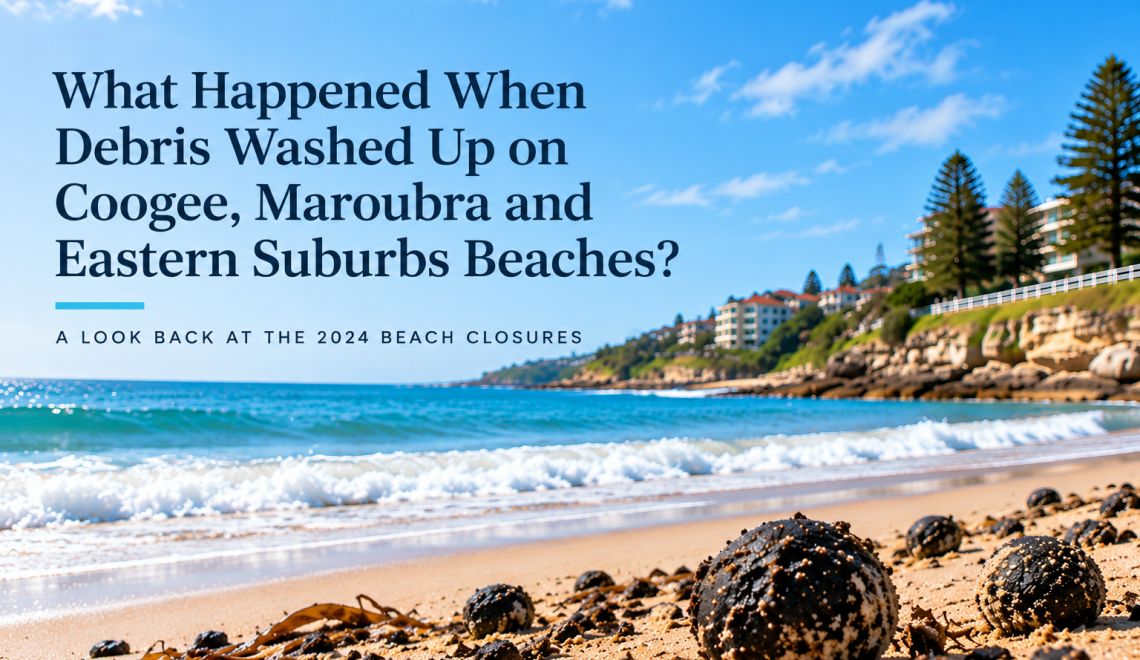
Thousands of mysterious ball-shaped pieces of debris began washing ashore, prompting Coogee, Clovelly, Maroubra, Malabar and Gordons Bay to be closed while authorities investigated and clean-up operations took place.
The closures attracted significant attention across Sydney and left plenty of locals wondering what had washed up, whether it was dangerous and when they would be able to return to the water.
Here’s a look back at what happened.
Why were the Eastern Suburbs beaches closed?
The incident began when large quantities of unusual ball-shaped debris were discovered along beaches within the Randwick City Council area.
As a precaution, beaches were closed to the public while Randwick City Council and NSW Government agencies investigated the material and worked to remove it.
The affected locations included:
- Coogee Beach
- Clovelly Beach
- Maroubra Beach
- Malabar Beach
- Gordons Bay
The discovery resulted in an extensive clean-up and investigation involving a number of government and community organisations.
When did the beaches reopen?
The five beaches reopened to the public on Saturday 19 October 2024 after Transport for NSW Maritime gave the all-clear.
Inspections conducted by Randwick City Council Environmental Health Officers before the reopening found that small amounts of debris were continuing to wash ashore, but at significantly lower levels than had initially appeared earlier in the week.
At the time, authorities advised that the material was not considered highly toxic to humans, allowing the beaches to reopen.
A coordinated clean-up across the Eastern Suburbs
The unusual event required cooperation between a number of local and state organisations.
Randwick City Council consulted and worked with the NSW Environment Protection Authority (EPA), Transport for NSW Maritime, NSW Police, Surf Life Saving NSW and local surf life saving clubs.
These included the clubs at Coogee, Clovelly, Maroubra and South Maroubra.
Council teams also continued inspecting beaches and removing material that washed ashore following the reopening.
What were beachgoers told to do?
Although authorities determined at the time that the material did not present a significant risk to people when it was on the ground, residents and visitors were advised not to pick up or handle unidentified debris.
Instead, anyone discovering suspicious material was encouraged to report it so it could be safely assessed and removed.
That’s still a sensible approach today. If you’re visiting an Eastern Suburbs beach and discover unusual material, marine debris or something you can’t identify, avoid handling it and alert the relevant council or lifeguards.
An unusual week for our local beaches
For Eastern Suburbs families, swimmers, surfers and local surf life saving clubs, the October 2024 incident was certainly an unusual one.
Beaches such as Coogee, Clovelly and Maroubra are such a normal part of everyday life in the Eastern Suburbs that having several of them closed simultaneously was particularly noticeable.
Fortunately, after inspections, testing and a substantial clean-up effort, the five Randwick City beaches were able to reopen on 19 October 2024.