
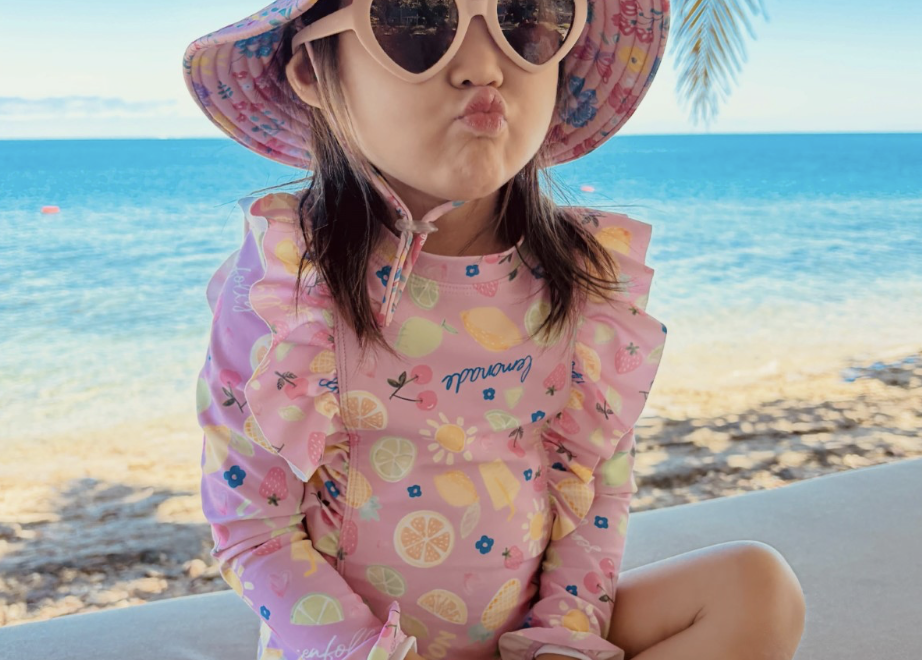
Toddlers and sunglasses are a notoriously bad combination. You find the perfect pair, you put them on, your toddler rips them off within forty seconds, you find them a week later under the car seat scratched beyond rescue. Repeat.
Here’s what actually works – from someone who’s lived through it.
Why Toddlers Rip Them Off
Three reasons, usually:
- The sunnies don’t fit properly, so they pinch or slide
- The lens isn’t polarised, so your toddler still squints in glare and finds the sunnies pointless
- The novelty is annoying – they don’t want anything new on their face
The first two are solved by buying the right pair. The third is solved by consistency – letting your toddler choose the colour, modelling it yourself, and keeping sunnies in the daycare bag so they become part of the routine not a battle.
The 2–4 Year Sweet Spot
This is actually the best age window to lock in the sunglasses habit for life. By four, kids who’ve been wearing sunnies since age two don’t think twice about putting them on. The habit is set.
Toddlers aged 2–4 are also the age group most exposed to direct sunlight in Australian conditions – running around the park, beach, playground, kinder yard – usually without the shade a baby still gets from a pram canopy.
What to Look For in a Toddler Frame
Three things:
Sized for a toddler face. Baby frames are too small. Kids-sized frames are too big. Toddler-specific sizing matters because it’s the difference between sunnies that stay on and sunnies that slide off every ten seconds.
Flexible frames. Toddlers sit on sunnies, throw them from strollers, drop them from monkey bars. Flexible frames bend without snapping. Rigid plastic doesn’t survive this stage.
Category 3 polarised lenses with 100% UV protection. Polarised cuts glare so your toddler can actually see without squinting. UV protection blocks the invisible rays that damage developing eyes.
The Polarised vs UV Protection Thing
A lot of parents don’t realise these are two different things. UV protection stops the invisible damaging rays (what causes eye damage). Polarisation cuts the visible glare (what causes squinting). You want a lens that does both.
Where to Find a Decent AU Brand
A toddler-specific brand matters more than you’d think. The sizing, the frame flexibility, the colour choice are all tuned differently for the 2–4 year window than for babies or older kids.
Worth a look: their toddler sunglasses range which is sized specifically for 2–4 year olds, uses Category 3 polarised lenses with 100% UV protection, flexible frames that survive the inevitable toddler abuse, and comes in eight colours so your toddler can pick their own. Also a 12-month care promise, which matters when you’re buying something a toddler is actively trying to destroy.
The first few weeks are a battle. By month three, your toddler asks for their sunnies before you leave the house. That’s the goal.
Mums, Don’t Skip This: Why Sunscreen Still Matters in Winter


