
Key Highlights
- The right treadmill starts with your fitness goals, not with the lowest price or the flashiest screen.
- Walking, jogging, and treadmill running need different belt sizes, speed ranges, and weight capacity.
- Key treadmill features like motor power, cushioning, incline, and foldability shape your workout experience.
- Safety features matter at home, especially a safety key and easy controls.
- For weight loss, look closely at incline options, interval training support, and heart rate monitoring.
- Before you buy, check space, warranty coverage, and app or programme options.
Introduction
Choosing a treadmill can feel simple until you compare models and realise how many treadmill features affect your results. The best choice depends on your fitness goals, your space, and how you plan to use it each week. If your treadmill workouts range from easy walks to harder sessions, knowing what matters first will save you money and frustration.
Assessing Your Unique Fitness Goals
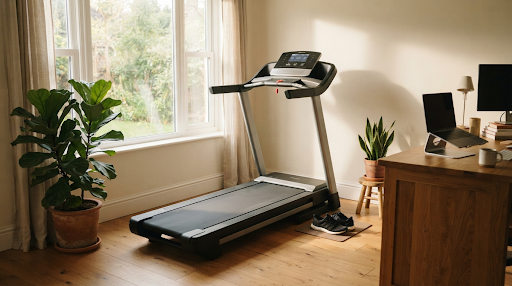
Start with your fitness objectives. Are you walking for overall health, building endurance, or aiming for weight loss? Your specific goals decide the best treadmill far more than looks or extra tech.
Think about your weekly routine too. A machine for a short daily walk is different from one used heavily during a longer fitness journey. Next, it helps to match those goals to the kind of sessions you will actually do.
Choosing a Treadmill for Walking, Jogging, or Running
If you mainly walk, a compact treadmill or walking pad is often enough. Many home units max out at 6 kph, ideal for light movement and desk use.
Jogging requires more space and smoother speed control. A running surface around 1300mm long allows a more natural stride and helps maintain good form.
For running, choose a treadmill with a larger deck and stronger frame. Full-sized models with belts up to 1500mm x 520mm suit taller users and distance runners. Always check the weight capacity, especially for multi-user households.
Weight Loss, Endurance, and Specialty Workouts Considerations
For weight loss, variety is key. A treadmill with incline and a wide speed range lets you switch between steady walks and intervals, keeping workouts challenging and boosting cardiovascular health.
For endurance training, pick a treadmill designed for long sessions. Advanced cushioning and a stable frame reduce strain, especially if you train often or weather disrupts your outdoor runs.
Some users need extra support. Rehabilitation treadmills with extended handles and adjustable safety belts offer added confidence. Higher inclines also target different muscles during slower workouts.
Key Treadmill Features That Make a Difference
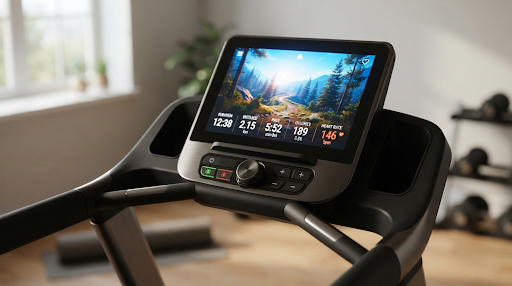
A quality treadmill is more than a moving belt. The most useful treadmill features are the ones that match your routine: motor power, belt size, incline capabilities, cushioning, and clear controls.
There is also a practical gap between home treadmills and gym-quality treadmills. Home units often focus on foldability and easier use, while commercial models are built for heavier, more frequent treadmill training. Let’s break down the features that matter most at home.
Understanding Cushioning, Shock Absorption, and Belt Size
Cushioning is important because it affects how your treadmill feels throughout your workout, not just at the start. Many treadmills feature shock absorption to reduce impact on your knees, hips, and ankles compared to outdoor surfaces.
Belt size matters too. Smaller belts are fine for walking but can feel cramped when running—a common mistake for first-time buyers.
For most home users, a belt around 51″ x 19″ works well. Runners may prefer 55″ x 20″ or 59″ x 20″. If you have a longer stride, choose a treadmill with extra deck length.
Decoding Treadmill Specifications for Australia
When you compare treadmill specifications in Australia, focus on the details that affect daily use. Motor power, weight capacity, speed range, and deck size tell you more than a product photo ever will.
Also think about available space, delivery, and setup. Some brands, including Lifespan Fitness, offer Australia-wide shipping, simple assembly guidance, and optional installation. After that, compare the core numbers carefully.
Power Ratings, Speed Range, and Weight Capacity Explained
Here is the short answer for a featured snippet: for weight loss or running workouts, the most important specs are motor power, speed range, incline, and weight capacity. These affect smoothness, workout variety, and long-term durability.
Home models in the compiled range start around 1.0 CHP and go up to commercial-level AC motors. Faster machines reach up to 20 kph, while lighter-use models top out lower. Heavier users should be especially careful not to underbuy.
| Specification | What it means for you |
| Lower motor power | Better for lighter walking and shorter use |
| Mid-range motor power | Suits regular home jogging and mixed sessions |
| Higher motor power | Better for frequent running and harder workouts |
| Lower speed range | Fine for walking-focused plans |
| Higher speed range | Useful for interval training and faster running |
| Higher weight capacity | More stability and better support for heavier users |
Treadmill Size and Foldability for Small and Large Spaces
Space can limit your treadmill options. Measure not just the floor area, but also the space needed to step on, off, and move safely—important in both small apartments and large home gyms.
If your treadmill shares space with work or living areas, a foldable model is ideal. Features like folding technology and transport wheels make storage easier.
- Measure the entire footprint before buying.
- Allow extra room around the treadmill for safe use
- Choose a foldable treadmill if space is limited or changes throughout the day
- Select full-sized decks only if your room can accommodate them
Understanding Incline and Training Program Options
Incline training can change a flat walk into a tougher, more effective session. It is one of the easiest ways to improve your workout experience without always increasing speed.
Training programs matter for the same reason. They help you avoid doing the same session every time, which can make progress stall. The next two sections show how incline capabilities and built-in options shape results.
How Incline Shapes Your Fitness Results
Incline settings increase effort even at a walking pace, making it easier to boost cardiovascular health without fast treadmill sessions. They also help make indoor workouts less monotonous.
Many home treadmills now feature 15 to 20 automatic incline levels, with some specialised models offering steep inclines and decline options. This variety lets you adjust workout intensity throughout the week.
Incline shifts the workload to different muscle groups, especially during slower climbs—a 20-minute walk on moderate incline can be much more challenging than a flat walk at the same speed. That’s why incline is so effective for weight loss and building stamina.
Comparing Built-In Programmes and App Compatibility
Built-in workout programs save you from planning each session and guide speed and incline changes, helping beginners stay consistent. For advanced runners, they add structure on busy days.
Modern treadmills often offer app support and Bluetooth connectivity for tracking and motivation, but these features are only useful if you’ll actually use them.
- Choose simple programs if you’re new to training
- Look for fitness apps if tracking motivates you
- Check Bluetooth in the product description
- Avoid overpaying for screens or extras you won’t use
Conclusion
In conclusion, choosing the right treadmill is key to meeting your fitness goals and enjoying effective workouts. Consider your needs—walking, jogging, or running—to find a machine with the right features, safety, and size for your space. Exploring incline options and training programs can further boost your results. Investing in a treadmill that fits your lifestyle helps you stay motivated. For questions or personalised advice, reach out for a free consultation!
Frequently Asked Questions
What mistakes should I avoid when buying a treadmill for home?
Do not choose based on treadmill prices alone. Check warranty coverage, read user reviews, and compare specs with your goals and space. Buying from reputable brands with clear support helps you make an informed decision and avoid a machine that feels too small or too weak.
Are home treadmills good for running and weight loss?
Yes, home treadmills can work well for weight loss and treadmill running if the specs match your use. A suitable running surface, incline options, and stable performance support cardiovascular fitness and make regular home workouts easier to maintain.
Is it worth getting a high-tech treadmill for beginners?
Usually, beginners do best with strong basic features first. Workout programs and heart rate monitoring can help, but Bluetooth speakers and extra tech are less important if you are still building consistency. Choose modern treadmills with simple controls before paying more for add-ons.


