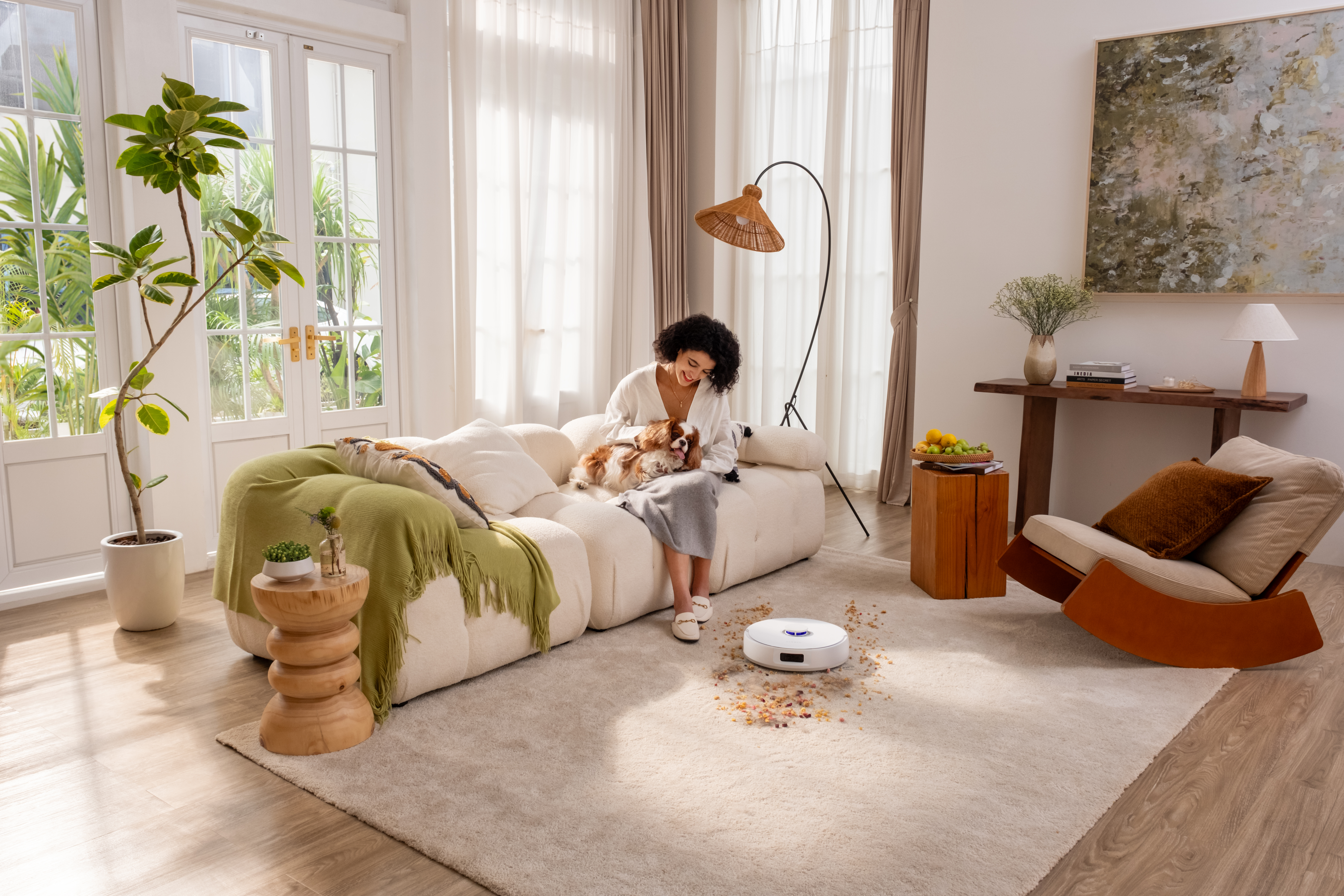
Robot vacuums have become common appliances in many homes because they automate repetitive household chores. For busy families, the ability to schedule cleaning can help maintain tidy floors with far less daily effort.
In households with young children, however, parents often pay closer attention to how household devices operate around toys, furniture, and play areas. Moving appliances, floor sensors, and rotating brushes can naturally raise questions about safety.
Before using a robot vacuum regularly in a family environment, it helps to understand how the devices work and which features improve everyday safety. With the right setup, parents can create cleaning routines that fit comfortably within a busy household.
Can You Use A Robot Vacuum Safely Around Kids?
Yes, you can generally use a robot vacuum safely around kids when it is used properly and basic precautions are followed. Most modern models are designed with safety features such as obstacle detection, slow movement, and automatic shutoff if something blocks the brushes. These features help reduce the risk of accidents during normal household use.
Robot vacuums with obstacle avoidance can also detect toys, furniture, and other objects on the floor, helping the device navigate more safely around play areas. Parents can further improve safety by scheduling cleaning times, keeping small objects off the floor, and supervising use around very young children.
Common Safety Concerns in Homes With Children
Most safety concerns related to robot vacuums come from everyday household situations rather than the device itself. Understanding these common scenarios can help parents reduce small risks and keep cleaning routines running smoothly:
- Small objects and toys: Toys such as blocks, puzzle pieces, or craft materials can be pulled into a robot vacuum and interrupt the cleaning cycle. A quick floor check before running the vacuum helps prevent this.
- Loose cords: Charging cables or headphone wires can sometimes get tangled in the robot’s brushes or wheels. Keeping cables organized helps reduce this risk.
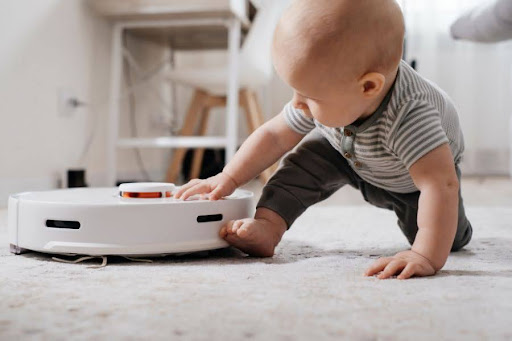
- Curious children: Young children may try to touch or follow a moving robot vacuum. Teaching kids that the device is not a toy can help avoid unnecessary contact.
- Docking station placement: The charging dock should be placed in a stable, low-traffic location rather than near busy play areas.
With simple precautions such as clearing floors and choosing a safe dock location, smart vacuums can be used comfortably in homes with children.
How To Choose A Robot Vacuum That Is Safe Around Kids?
When choosing a robot vacuum for a home with children, certain features can help improve safety and reduce everyday interruptions. Devices with reliable navigation, obstacle detection, and controllable settings are often easier to use safely in busy family environments.
Obstacle Avoidance Technology
Modern robot vacuums often include sensors or cameras that detect objects in their path. This allows them to avoid toys, shoes, and other common items found on family room floors.
Some robot vacuums with obstacle avoidance, like DEEBOT models from ECOVACS, use advanced detection systems to recognize common household objects and adjust their path accordingly. Better obstacle recognition means fewer collisions and less chance of items getting caught in the brushes.
Reliable Navigation
Consistent navigation helps the robot move smoothly through rooms without random or erratic motion. Predictable movement makes it easier for family members to anticipate where the robot will go next.
This can reduce surprises for both children and adults moving around the home.
No-Go Zones
Many robot vacuums allow users to define areas that the device should avoid. These “no-go zones” can be useful for spaces where toys are frequently scattered, such as playrooms or craft areas.
Parents can also block off areas where cords or delicate items are commonly present.
Child Lock or App Controls
Some devices include child lock features or app-based controls that prevent accidental button presses.
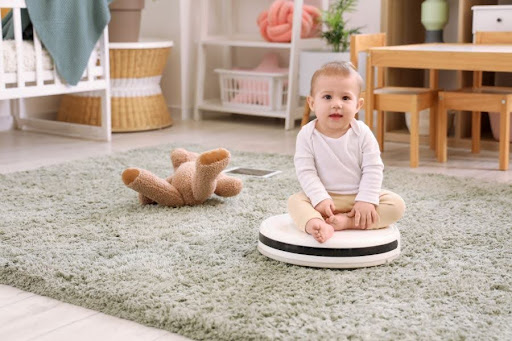
This can help avoid situations where children start or stop the robot by pressing the buttons on the device.
Predictable Scheduling
Scheduling cleaning sessions at specific times helps establish a routine. Running the robot when children are not actively playing on the floor can make the process safer and less distracting.
Low-Noise Operation
Quieter devices tend to cause fewer reactions from young children. Loud noises can startle toddlers or encourage them to chase the robot out of curiosity.
Lower noise levels help the robot operate more like a background appliance rather than something that draws attention.
Conclusion
Robot vacuums are generally safe to use around children, especially when households follow a few basic precautions. Most risks involve everyday household clutter rather than the device itself. By clearing small objects from the floor, placing the docking station thoughtfully, and scheduling cleaning during quiet hours, parents can easily integrate a robot vacuum into a family routine.
With the right setup and features, these devices can help maintain cleaner floors while keeping daily life running smoothly in homes with kids.
Best Robot Vacuum Australia 2026: Narwal Freo Z10 Review for Busy Families