
Saturday morning sport in the Eastern Suburbs has a rhythm to it. Netball at Heffron Park, nippers down at the beach, junior footy, and the mad dash between two fields because you have kids in different age groups. Then, somewhere in the middle of all that, a child goes down holding an ankle and every adult within thirty metres reaches for the esky.
Ice is the reflex. It has been the reflex for about forty years. But the advice around cold and injury has shifted quite a bit, and the word “cryotherapy” now covers three fairly different things that tend to get muddled together. Here is a practical guide to what actually helps, and when to skip the freezer entirely and call someone qualified.
First, work out whether it needs a professional
Before any conversation about cold, the more useful question is whether you are dealing with a bump or an injury that needs assessing.
Get it looked at properly if your child cannot put weight on the limb, if there is an obvious deformity, if swelling comes up fast and hard, if they mention numbness or pins and needles, or if they heard or felt a pop at the moment it happened. Pain that seems out of proportion to what you actually saw happen is also worth a look.
Kids are also not small adults. Their growth plates are still open, which means an injury that would be a simple sprain in a grown up can be something quite different in a nine year old. A physio or GP appointment on Monday is rarely wasted.
The three things people mean by “cold therapy”
Once you know you are dealing with something manageable, it helps to understand that cold therapy is not one single thing.
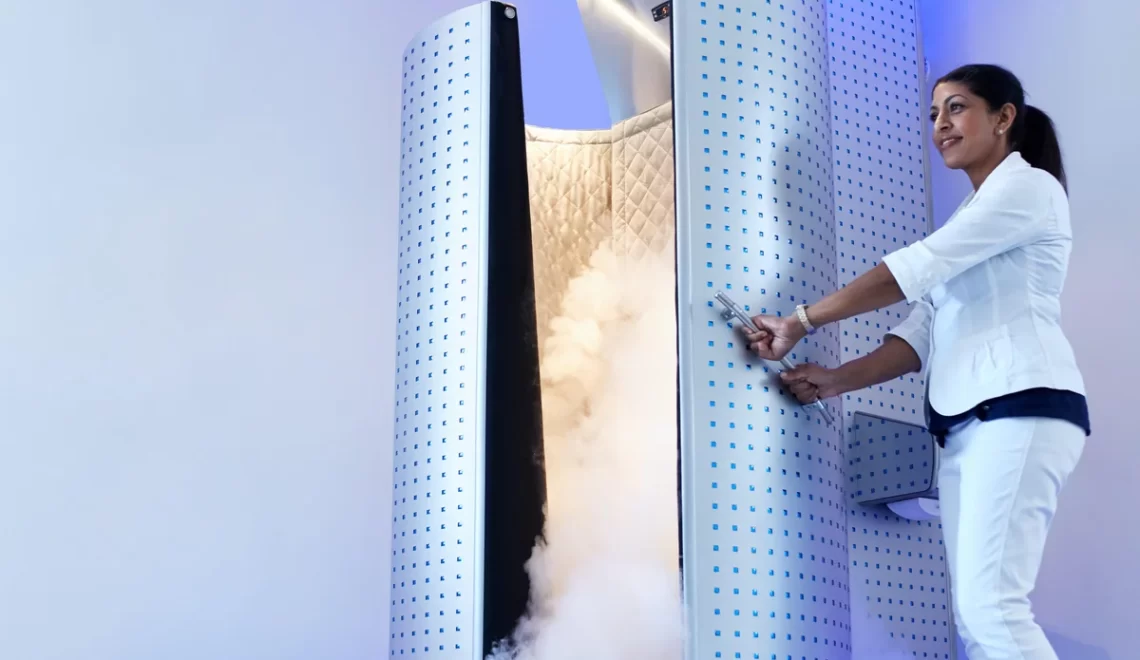
There is the humble ice pack, which most of us have in the freezer. There is whole body cold exposure, meaning ice baths and cold plunges, which has become a fixture of Sydney fitness culture. And there is local cryotherapy, which uses purpose built equipment to deliver controlled cold to one specific area, such as a single ankle or knee, rather than to the whole body.
They are not interchangeable, and they are not solving the same problem.
The ice pack, and what has changed
The RICE protocol, meaning rest, ice, compression and elevation, was coined by Dr Gabe Mirkin in 1978 and became gospel for a generation of parents and coaches. Mirkin himself has since publicly stepped back from the ice component, and sports medicine has largely moved with him. The framework published in the British Journal of Sports Medicine in 2019, known as PEACE and LOVE, puts far more emphasis on gentle early movement and gradual return to load than on aggressive icing.
The thinking is that inflammation is not really the enemy. It is the process the body uses to clear damaged tissue and begin repairs. Suppressing it heavily for days on end may slow that down rather than speed it up.
None of which makes ice useless. Short applications, roughly ten to fifteen minutes with a cloth between the ice and the skin, are a perfectly reasonable way to take the edge off pain in the first day or two. Just do not strap it on for an hour, and do not treat it as the main event.
The cold plunge, and why it is not the answer here
Ice baths are everywhere at the moment, and they do have a legitimate place for general recovery after hard training, particularly for how sore you feel afterwards. There is also reasonable evidence that plunging immediately after strength work can blunt some of the adaptations you were training for, so timing matters more than enthusiasm.
What a cold plunge is not is a treatment for an acute injury. Putting an entire child into cold water because they hurt one ankle is a great deal of cold stress for no targeted benefit, and whole body cold immersion is generally not appropriate for children as an injury treatment in any case.
Where local cryotherapy fits
Local cryotherapy is the targeted option. Instead of cooling everything, a practitioner applies controlled cold to one specific site for a short session, usually somewhere in the range of ten to twenty minutes.
The mechanism works in stages. The cold narrows blood vessels in the area, which helps limit swelling. It slows nerve conduction, which is why the area goes numb and the pain settles. Then, once the cold is removed and the tissue rewarms, blood flow increases again, which supports repair.
Because both the temperature and the duration are controlled, and because someone assesses the area before treating it, this approach avoids the two ways the frozen peas method goes wrong: too cold for too long, or applied to something that should have been properly examined.
In practice it is used most often for sprains, strains, tendon irritation and the sort of ongoing niggle that will not settle on its own. It suits adults and older teenagers far more than young children, and any clinic worth visiting will assess first and will steer clear of broken skin, reduced sensation or known circulatory conditions.
What actually helps most in the first few days
For a run of the mill sprain, the unglamorous stuff does most of the work:
- Settle the pain however works for your child, including short ice applications
- Gentle movement within comfort rather than complete rest, once anything serious has been ruled out
- Elevation while they are sitting still anyway, which is most of Saturday afternoon
- A gradual return to normal activity rather than waiting for pain to hit zero
- A physio review if things are not clearly improving within a week
Cold therapy of any description is a tool for managing symptoms so your child can move comfortably while they heal. It is not the thing doing the healing. Sleep, a sensible build back to sport and a bit of patience handle that part.
The reassuring news is that most Saturday sport injuries are exactly what they appear to be, and they settle. Knowing which kind of cold does what simply means you reach for the right one.
The Benefits of Cryotherapy for Recovery, Performance and Overall Wellbeing


