Getting a pet can be an exciting experience. It can even be a wonderful opportunity to engage your children in the care of another living being and help them learn a few of life’s important lessons along the way. Whether you have a newly adopted pet in the home or you are considering getting a pet from a breeder for the first time, including your kids in the care of your pet can be a wonderful opportunity for lifelong lessons.
How can you teach your kids to care for pets?
Start with Age-Appropriate Tasks
The key to success is to ensure the level of responsibility is appropriately matched to the developmental stage of the child. Toddlers and preschoolers can “help” fill bowls (with supervision!), brush a friendly cat or a docile dog with a soft brush, and measure food into bowls. These relatively easy tasks boost their confidence and make the experience of caring for pets enjoyable.
Older primary school children can be given increased responsibility in the care of pets. They can take on daily feeding, refilling water bowls during the day, basic grooming, and exercise activities such as playing fetch in the garden or accompanying the adult to dog walking. Teenagers can be responsible for virtually all pet care tasks, including walking dogs alone, cleaning litter trays or kennels, accompanying pets to veterinarian appointments and knowing when they are due, and even learning how to determine if a pet is unwell.
Create a Pet Care Routine
Kids love routine and so do pets. Sit down as a family and create an easy to follow daily routine for the family to adhere to. This can include morning feeding before school, playtime after school, evening walks and bedtime cuddles. You might also want to consider a visual chart for younger children where they can check things off as they complete them – so satisfying!
Make it clear that caring for the pet is non-negotiable. If your pooch or kitty is relying on you, so is the rest of the family. This imparts to the child a sense of responsibility for their pet.
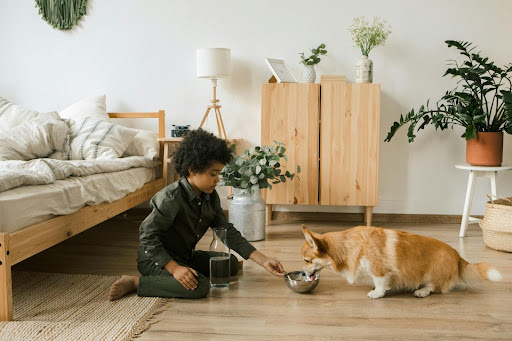
Teach Through Demonstration
Show, don’t tell. When it’s time to feed the cat, show kids how much to feed and why it’s not kind to the cat to overfeed. When you brush the dog, show them the gentle way to do it and areas that may be sensitive for the dog. Let your children watch you check the pet’s ears, teeth and paws so they can identify what’s normal and what could be an issue.
Talk it out. Explain what you are doing as you are doing it. Describe why the pet needs fresh water, how often the bed needs to be changed, and why we don’t bother the pet while it’s eating.
Focus on Body Language and Safety
One of the best lessons to teach children is to read animal body language. A wagging tail doesn’t always mean a happy dog, cats with ears back need their space, and all pets deserve quiet time for a little siesta.
You’ll want to teach safety rules right away. Rules such as asking to approach a pet, never disturbing a pet who is resting or eating, being gentle with paws and tails, and knowing when to ask an adult for help. These rules are for everyone’s safety.
Make It Fun, Not a Chore
While pet care is a responsibility, it doesn’t have to feel like drudgery. Turn feeding time into a mini science lesson about animal nutrition. Make grooming sessions special bonding time with music playing. Create games around training your dog, with children earning points for successful commands. Celebrate milestones together, like when your child successfully walks the dog solo for the first time or when the cat finally purrs during their brushing session.
Involve Them in the Bigger Picture
Beyond daily care, engage them in other responsibilities of pet ownership. Take them to the vet with you so they can hear about preventative care and how to ask questions. Involve them in choosing new toys or bedding. You could even research the breed, food preferences, or enrichment activities together. All of this fosters a more well-rounded view of pet ownership rather than just the act of feeding and stroking the pet.
Model Empathy and Kindness
Kids learn by example. Be nice to your scared dog during thunderstorms, calm your cat at the vet and forgive puppy accidents and your children will learn empathy. Talk about your pet’s needs and feelings. “Max is not himself today, we should check on him” or “Luna has been cooped up, she needs to go out” build consideration for others and emotional intelligence.
Handle Setbacks with Grace
Your child will forget to fill the water bowl. They’ll grumble about walking the dog in winter. The cat will scratch despite gentle handling. These moments are learning opportunities, not failures. Stay calm, use them as teaching moments, and remember that developing responsibility is a gradual process. Praise effort and improvement, not just perfect execution.
The Rewards Are Worth It
Teaching children to care for animals does take some work on behalf of the parents, but the benefits are absolutely amazing. Kids that care for animals throughout their childhood become more compassionate, learn about commitment, become confident about their abilities, learn about the needs of others, and even learn how to foster relationships with “furry” family members that depend on them.
The child who weighs his dog food for him every morning; the child who remembers to fill the water bowl without being asked; the child who knows that her cat is just having a bad day…these skills go beyond pets. They are learning to care for a dependent, and that lesson stays with you.
Your family pet can be one of the best educators around in childhood. By allowing this to happen for your children and allowing them to take care of family pets, you give them gifts that will last well into their adulthood. Start small, but remember, pets are forgiving but not perfect just like we are all human!