

Should a three-year-old have a smartphone? How much screen time is too much? And can educational apps actually help preschoolers learn?
For many parents, smartphones have become a convenient way to keep young children entertained, whether it’s during a café visit, a long car journey or simply while preparing dinner. But with so much conflicting advice about kids and screen time, it’s not always easy to know what’s best.
As children become familiar with digital technology at increasingly young ages, parents are understandably asking questions about the effects of smartphones on childhood development, behaviour, sleep and early learning.
The good news is that healthy screen habits don’t have to mean banning technology altogether. It’s about understanding the potential benefits and risks, choosing age-appropriate content and finding the right balance between digital entertainment and real-world experiences.
To help families make informed decisions, we’ve answered five of the most common questions about smartphone use for children aged 3–6, including recommended screen time limits, educational apps and practical advice for raising children in a digital world.
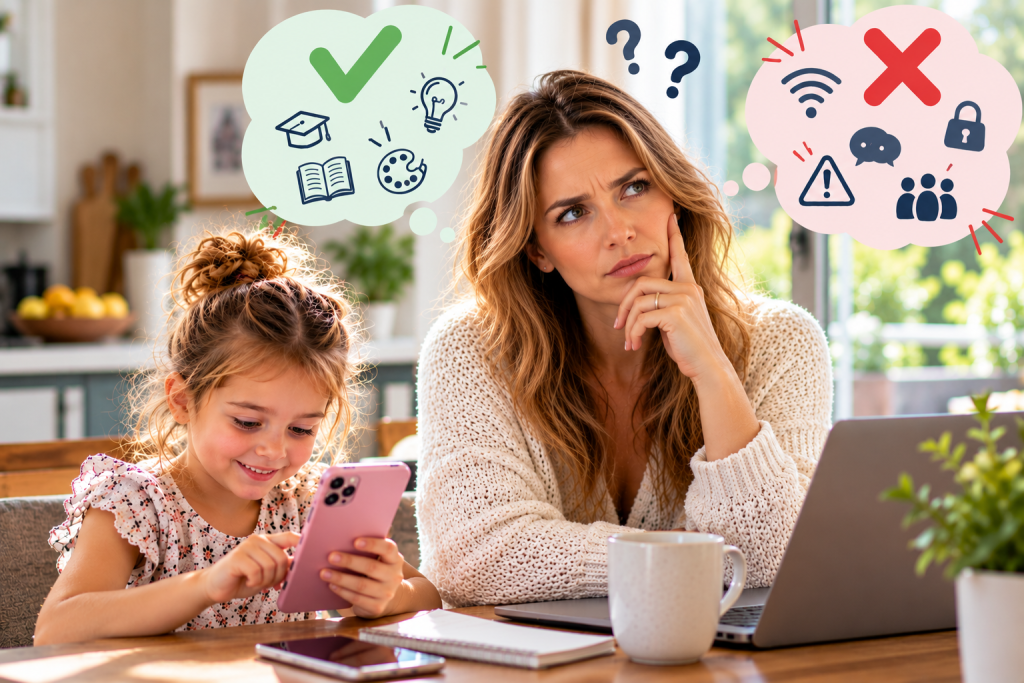
Should a 3-year-old have a phone?
Most three-year-olds don’t need their own smartphone. At this age, children benefit most from physical play, imaginative activities and face-to-face interaction. Occasional, supervised use of a parent’s phone for an educational game or video can be appropriate, but smartphones shouldn’t become their main source of entertainment.
Is it bad for a 4-year-old to use a smartphone?
Not necessarily. Short periods of supervised smartphone use aren’t automatically harmful. However, excessive screen time can take away from important activities such as outdoor play, social interaction and sleep. Parents should focus on age-appropriate content, reasonable limits and balancing screen time with other experiences.
How much screen time should a 5-year-old have?
Australian movement guidelines recommend no more than one hour of sedentary recreational screen time per day for children aged two to five, with less being better. This includes recreational use across smartphones, tablets, televisions and other screens rather than one hour per device.
Can smartphones affect a child’s behaviour?
Some children may become frustrated when smartphone time ends, particularly if they’re watching highly engaging videos or playing games. Frequent screen use can also displace opportunities to practise patience and emotional regulation. Consistent limits, advance warnings and enjoyable screen-free activities can help make transitions easier.
Are educational smartphone games good for preschoolers?
Quality educational games can help children practise letters, numbers, shapes and simple problem-solving skills. However, apps work best when parents participate and connect the activities to real-world learning. Educational games should complement books, creative play and everyday experiences rather than replace them.
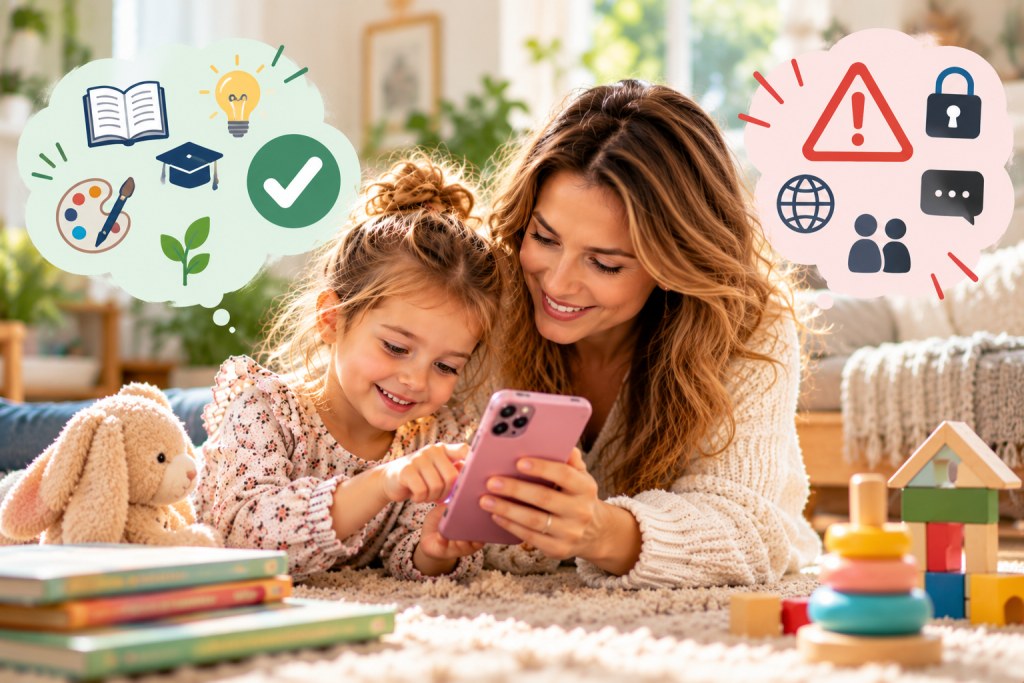
The Final Verdict: Smartphones Can Have a Place in Childhood, but Parental Guidance Is Essential
Smartphones and digital technology are part of the world our children are growing up in, and avoiding them altogether may not be necessary or practical. When used in moderation, smartphones can offer educational opportunities, encourage creativity and provide convenient entertainment for young children.
For children aged three to six, the key is balance, age-appropriate content and active parental involvement. A little supervised screen time can be beneficial, provided it doesn’t replace outdoor play, social interaction, physical activity or quality family time.
However, parents should never underestimate the significant risks associated with internet access. Even seemingly harmless apps and children’s videos can expose young users to inappropriate content, misleading advertising, privacy risks, online scams and potentially harmful interactions. Parental controls can reduce these risks, but they cannot eliminate them entirely.
Parents should remain actively involved in their children’s digital journey from the very beginning. This means choosing suitable apps, supervising online activities, setting clear boundaries and talking to children about what they see and experience. For preschoolers, offline content and closely supervised access are generally safer choices than unrestricted internet browsing.
Ultimately, the question isn’t simply whether young children should use smartphones, but how we introduce technology safely, responsibly and at the right pace.
Technology can be a valuable learning tool, but it should never become a substitute for parenting, real-world experiences or human connection.
Our advice? Say yes to carefully managed technology, but no to unsupervised internet access for young children.


