
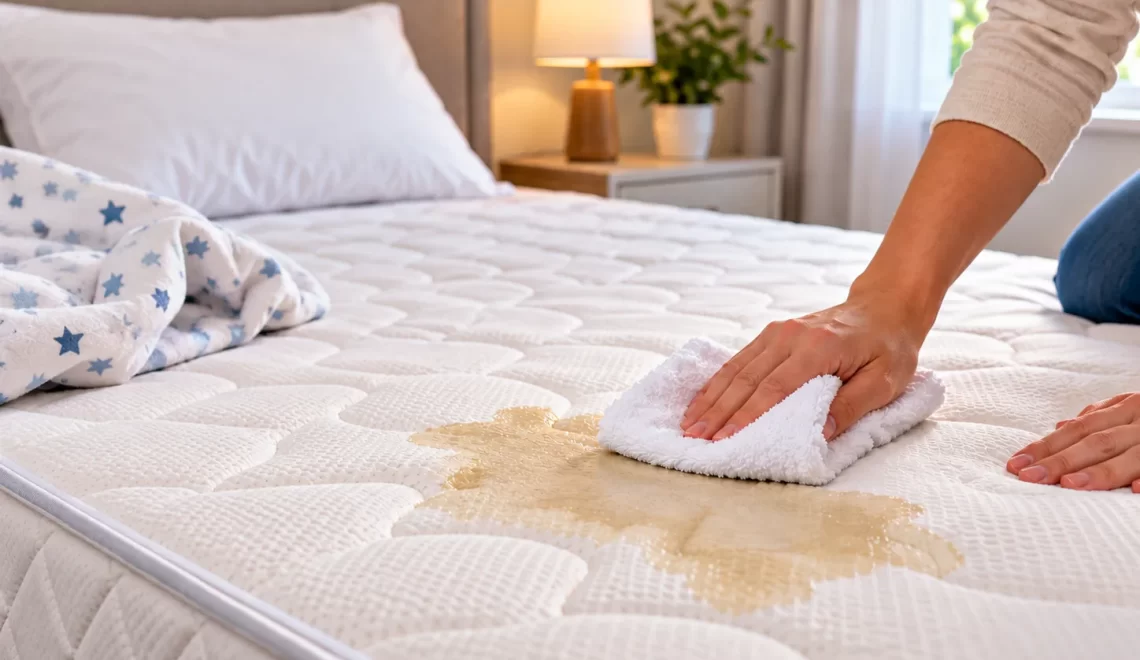
It’s 2 am. Your child is standing beside your bed in wet pyjamas, and you know the sheets will need changing. You’re tired, they’re upset, and the last thing you want is a long cleaning job.
First, let your child know it’s okay. Bedwetting is common, and it is not something children do on purpose. Then deal with the wet bedding and mattress, one small step at a time. Quick action can help, but there’s no need to scrub or soak the bed.
First, Get Your Child Comfortable
Help your child change into dry pyjamas and find a warm, dry place to rest. If you have spare sheets ready, making the bed again will be much easier.
Keep your words simple: “It’s okay. We will sort it out.” There’s no need for blame, and the clean-up can wait a few minutes while your child settles.
Take the sheets, pillowcases and wet mattress protector off the bed. Follow their wash labels and set them aside for the laundry. If any bedding is heavily wet, keep it away from the clean items.
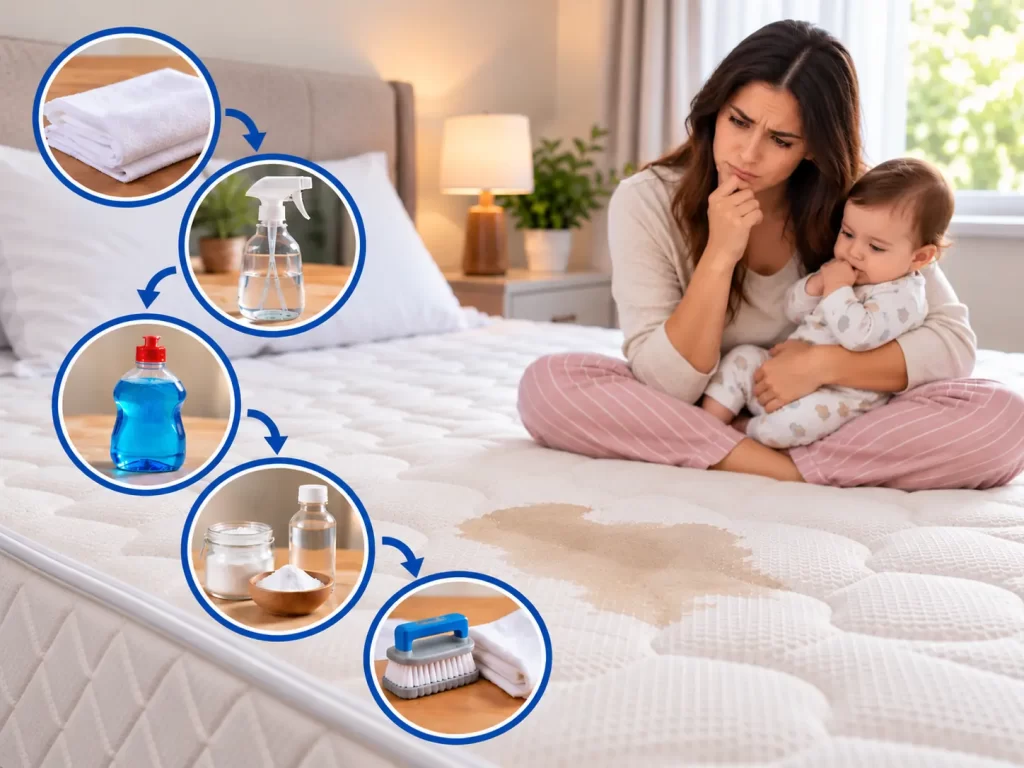
Blot the Mattress Before the Stain Spreads
If urine has reached the mattress, grab a clean, dry towel. Press it onto the wet area, then lift it away. Repeat with a dry part of the towel until you’ve picked up as much liquid as you can.
Avoid rubbing. It can spread the mark across the cover and push more liquid into the layers below.
A mattress stain can look small on top even when some moisture has travelled deeper. That’s why it helps to start with a dry towel, not a bottle of cleaner.
You don’t need a cupboard full of products to take this first step.
Check the Care Label Before You Add Anything
Not all mattresses can be cleaned the same way. A foam mattress, a spring mattress and a mattress with a special top layer may have different care rules.
Look for the label on the mattress or check the maker’s website. Some allow light spot cleaning with a damp cloth. Others warn against certain products or wet cleaning.
If your mattress allows it, gently dab the marked area with a slightly damp white cloth, using only the cleaning method approved by the maker. Test in a hidden spot first.
Don’t pour water over the stain. Avoid bleach, strong sprays and home-made mixes unless the care instructions clearly allow them. Never mix cleaning chemicals.
Let the Mattress Dry All the Way Through
This is the step that’s easy to rush. The surface can feel dry while the padding underneath is still damp.
Open a window if the weather allows, and use a fan to move air around the room. Leave the mattress uncovered while it dries, and don’t put fresh sheets back on until it is fully dry.
This matters even more with foam mattresses, which may hold moisture for longer. Don’t use a steam cleaner or wet vacuum unless the mattress maker says the method is safe.
While the bed is drying, you can wipe the bed frame and clean the floor around it. If you’re planning a bigger household clean, Clean Nation’s cleaning services across Australia are one option to explore. Just check which tasks are included, as mattress stain treatment needs its own care.
If the mattress stays damp or starts to smell musty, don’t cover it up and hope for the best.
What About Old Yellow Stains or a Lingering Smell?
Sometimes you find a mark days later, after the bedding has been changed. It may be harder to work out what caused it or how far it has gone.
Don’t keep adding water and scrubbing. That can leave a larger wet patch without removing the stain.
You may have heard that bicarb soda, vinegar or steam will fix almost anything. They won’t suit every mattress. A home remedy might change the smell for a while without cleaning what is underneath. Always check the care label before trying anything.
If the mark keeps coming back, the smell remains after drying or you’re unsure about the mattress material, it is sensible to ask for advice rather than risk damage.
When Is Professional Mattress Cleaning Worth Considering?
Professional mattress cleaning may help when a stain is hard to treat at home, or when you’re dealing with ongoing odour. A cleaner should first ask about the mattress type, age, stain and care label.
For families in Sydney’s eastern suburbs, mattress cleaning services in Sydney are an option to ask about. Before booking, explain that the mark came from bedwetting and check which cleaning methods are suitable for that mattress.
No cleaner can promise to remove every mark or reach liquid that has soaked deep inside. If the mattress has stayed wet for a long time, has mould or cannot be dried fully, replacement may be the safer choice.
Make the Next Night-Time Accident Easier
A little preparation can save a lot of work at 2 am.
Choose a waterproof mattress protector that fits the bed and follow the washing instructions. Keep a spare protector, fitted sheet and pyjamas close by.
Some parents make the bed in layers: sheet, waterproof protector and another sheet. If there’s an accident, you can remove the top layer and get your child back to sleep faster.
In the morning, wash what needs washing and air the room. Keep cleaning products where children cannot reach them.
The aim isn’t to stop accidents through cleaning. It’s to make the clean-up less stressful for everyone.
When Should You Ask About the Bedwetting Itself?
A cleaning routine helps with the mattress, but it won’t explain why a child wets the bed.
Bedwetting is common in younger children. If your child is still wetting the bed after about age six or seven, starts again after being dry for a while, or feels worried about it, speak with your GP.
You can keep the conversation calm and private. Your child needs comfort and support, not a lecture about the sheets.
A Quick Morning-After Checklist
Once everyone has had some sleep, check a few things:
- Are the wet sheets and protector washed or ready to wash?
- Is the mattress fully dry, not just dry on the surface?
- Is there still a stain or smell that needs checking?
- Do you have a clean protector and spare bedding for tonight?
If the mattress is still damp, use another safe sleeping spot until it is dry. Don’t hide dampness under a fresh sheet.
A Small Clean-Up, Not a Big Family Drama
Bedwetting can make for a hard night, but the response can stay simple: help your child, remove wet bedding, blot the mattress and follow its care instructions.
You might remove the mark, or you might need professional advice. Either way, being gentle with the mattress and kind to your child matters more than getting everything perfect before sunrise.


