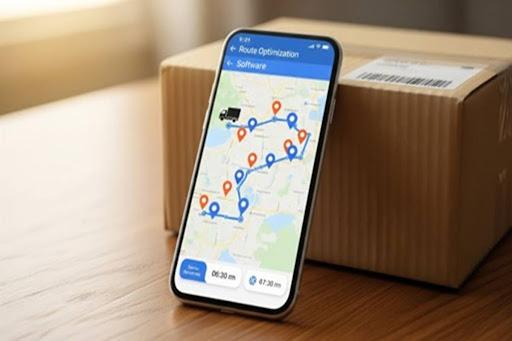
Have you ever wondered how courier companies manage to deliver packages so efficiently? Well, the secret lies in route optimization, using tools and software that plan routes and manage their logistics operations.
In today’s fast-paced and digital world, faster and smarter delivery solutions are a necessity driven by growing businesses and increased customer expectations.
Route optimisation is one of the most effective tools for finding the best possible routes that save time, money and resources while delivering on time.
So whether you are managing a fleet or a small local business, route optimisation and transform your delivery operations and increase your revenue by meeting customer demands faster and more efficiently.
What Is Route Optimisation?
Route optimisation is the process of finding the most efficient way for a driver to complete multiple stops. Instead of simply relying on a map or GPS for directions, route optimisation uses data and algorithms to calculate the quickest and most cost-effective path.
Route optimisation software considers the following variables when calculating the best possible routes:
- Traffic conditions
- Delivery time windows
- Vehicle capacity
- Road restrictions
- Driver availability
By analysing all these variables, route optimisation ensures that every delivery follows the smartest possible path, saving time, money, and reducing stress.
How Route Optimisation Works
Route optimisation software uses certain data to make sense of complex logistics problems by using advanced algorithms and real-time data to calculate the best possible routes.
Here’s a simple breakdown of how it works:
- Input Your Data – The system takes details like delivery addresses, driver schedules, and vehicle capacities.
- Analyse Conditions – It evaluates external factors like live traffic updates, road closures, and the distance between stops.
- Generate Optimised Routes – The system then suggests the fastest, most efficient route for each driver.
- Monitor and Adjust in Real Time – As deliveries happen, real-time route optimisation tools can adapt to changing conditions such as weather or traffic jams.
By automating these steps, route optimisation eliminates human error and helps businesses deliver more, faster, and with fewer resources.
Why Route Optimisation Is Essential for Faster Deliveries?
Route optimisation can speed up delivery operations in the following ways:
- It reduces time on the road by calculating the quickest and shortest paths, thus minimising detours.
- The software uses real-time traffic data to reroute drivers when there are traffic delays or congestion.
- Optimised route ensures that packages arrive within scheduled times.
- Drivers are more productive because they can complete more stops without any rushing.
- Fast and reliable deliveries build customer trust and loyalty.
Key Benefits of Route Optimisation
Beyond speed, route optimisation brings a range of benefits to both businesses and customers.
- Fuel and Cost Savings – Shorter routes mean less fuel consumption and reduced vehicle wear and tear.
- Lower Carbon Footprint – Efficient routes contribute to sustainability by cutting down emissions.
- Better Resource Management – Businesses can plan deliveries based on available vehicles, drivers, and delivery priorities.
- Scalability – As your business grows, route optimisation can easily handle more stops and larger delivery networks.
- Data Insights – Advanced route optimisation tools provide analytics that help businesses improve delivery strategies over time.
These benefits show why route optimisation is not just a trend, it’s a necessity for modern delivery operations.
How to Get Started with Route Optimisation
Getting started with route optimisation doesn’t have to be complicated.
- Assess Your Current Delivery Process – How you manage your current deliveries, and whether there are any inefficiencies such as missed time windows, high fuel costs or driver overload.
- Choose the Right Route Optimisation Software – Choose a software platform with tools such as real-time tracking, traffic updates, driver management and easy integration into your existing management systems.
- Train Your Drivers and Staff – Train your drivers on how to use the software and follow optimised routes.
- Monitor Performance Metrics – Monitor your performance by tracking key metrics such as delivery time, usage, and customer satisfaction to spot areas for improvement.
- Continuously Improve – By gathering more data, you can refine your routes and adjust to new conditions and customer needs.
Common Mistakes to Avoid When Optimising Routes
Even the best systems can fail if misused.
Here are a few pitfalls to avoid:
- Ignoring Real-Time Data – Failing to use live traffic or weather updates can result in unnecessary delays.
- Overcomplicating Routes – Adding too many stops without proper planning can confuse drivers and reduce efficiency.
- Not Updating Information – Ensure addresses, delivery priorities, and vehicle capacities are always up to date.
- Skipping Driver Feedback – Drivers know the roads best—use their insights to refine your routes further.
Avoiding these mistakes can make your route optimisation strategy more effective and reliable.
Conclusion: The Road to Faster, Smarter Deliveries
Route optimisation is a technology that provides a logistical advantage, keeps customers satisfied, reduces costs and improves your overall efficiency. By embracing route optimisation, you can easily transform your delivery operations, streamlining the process and saving both time and resources.
Route optimisation is a smart delivery strategy that is the future roadmap to success for all your delivery needs.

From Safety to Savings: 7 Benefits of Residential Vacuum Excavation