
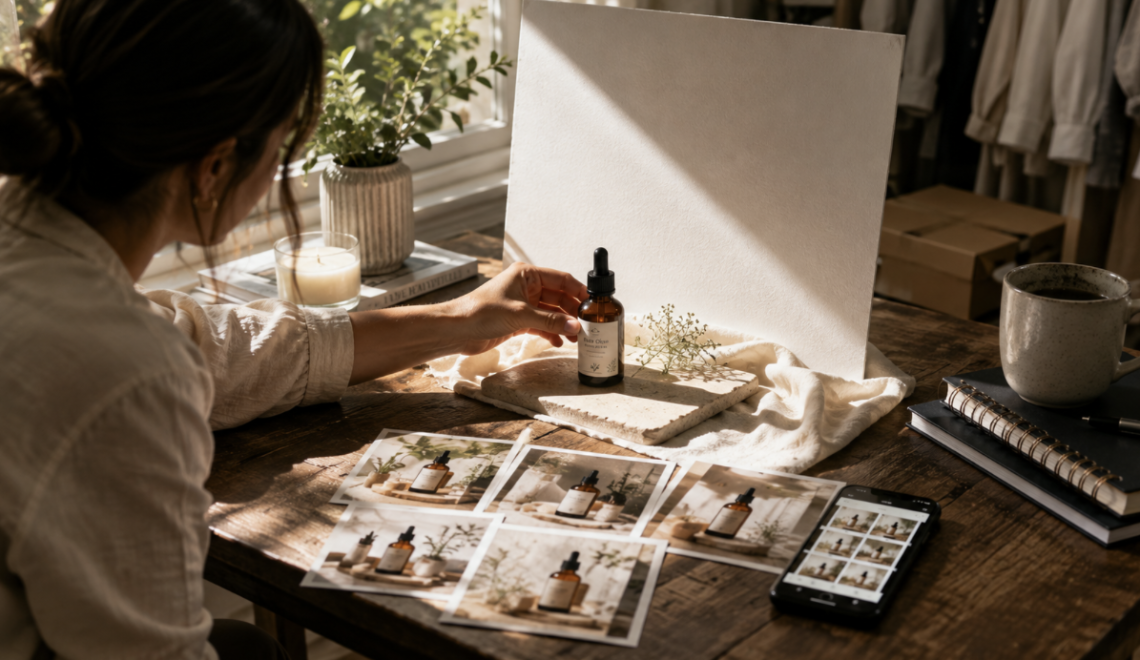
A lot of side businesses start the same way. A phone photo, a quick caption, and a post that goes up between school pickup and dinner. That is completely normal, and it is exactly how most successful small accounts begin.
The problem shows up a bit later, once the business is real enough that it needs to look real too. A customer scrolling through a feed decides in seconds whether an account looks like a proper business or a hobby that has not quite launched yet, and photos are usually what makes that call.
The good news is that fixing this no longer requires the thing most side businesses genuinely cannot afford, a professional photographer and a studio day. There is a more accessible way to close that gap, and it is worth understanding before working through the rest of the usual Instagram advice. Higgsfield, and specifically an AI Image Generator, is the tool making that shift possible for accounts with no production budget at all.
The Real Reason Side Hustle Feeds Look Amateur
It is rarely the products. Most side businesses, whether that is candles, kids’ accessories, resin art, baked goods, or a tutoring service, are genuinely good at what they do. Long before anyone had heard of Higgsfield, this same gap between good products and average photos was quietly costing side businesses sales.
What lets the feed down is almost always the same thing: inconsistent photos taken in whatever light was available that day, against whatever background happened to be nearby.
A studio shoot would fix that instantly. It would also cost more than most side businesses make in a month, which is exactly why most people never book one and just keep posting what they have. This is precisely the gap Higgsfield was built to close, through an AI Image Generator made for accounts in exactly this position.
Solving the Photo Problem Without a Studio Budget
This is the part most Instagram advice skips over entirely. Plenty of guides will tell you to pick a colour palette and stay consistent with it, which is good advice, but it assumes you already have photos worth being consistent with.
Higgsfield covers that with an AI Image Generator, built to produce polished product images from a written description rather than a studio booking. A candle photographed on a kitchen bench can become a styled flat lay with even lighting and a background that actually matches your brand, without buying props or waiting for a sunny afternoon by the window. An AI Image Generator handles that transformation from a written description alone.
The point is not to fake a product that does not exist. It is to give a real product the kind of presentation a studio shoot would normally provide, at a fraction of the cost and without needing to clear an afternoon for it.
Here is roughly how the two approaches compare for a small side business:
| Factor | Studio Photoshoot | AI Image Generator |
| Typical cost | $300 to $800+ per session | A fraction of that, per image |
| Turnaround time | Days to book and shoot | Minutes per image |
| Consistency across a product range | Depends on repeating the same setup | Same style reused on every image |
| Seasonal or themed variations | Requires a new shoot each time | New setting from a new prompt |
| Fits around school hours and a day job | Rarely | Yes |
That matters more for a side business than almost any other type of account, since the person running it is usually also running a household, a job, or both, and does not have a spare weekend to dedicate to a photoshoot every time a new product launches. The same instinct behind winning local search for trade businesses applies here too, showing up consistently and looking credible matters more than any single perfect post.
The way this actually works in practice is straightforward. Rather than uploading an existing photo and hoping software can rescue it, Higgsfield generates the image directly from a written description, the product, the setting, the lighting, the mood, all specified up front rather than fixed after the fact.
For a side business, this changes what a product launch actually looks like. Instead of scrambling to find good light on a Saturday morning before a market or a restock, the same product description can produce a consistent set of images whenever they are needed, at whatever time of day actually suits a busy schedule.
There is also a consistency benefit that goes beyond any single photo. A side business selling several products, say a range of candles or a line of handmade jewellery, can keep every listing looking like it belongs to the same brand by reusing the same style and lighting description across the whole range through Higgsfield. That kind of repeatability is not something reshooting a full product line every season can match, especially for a business run around school hours and a day job.
Handling Seasonal Content Without a New Photoshoot Every Time
Side businesses that sell physical products tend to face a specific version of this problem around Mother’s Day, Christmas, or the start of the school year, moments when a seasonal photo would genuinely help sales but there is no time or budget to arrange a themed shoot on short notice.
This is one of the more useful applications of an AI Image Generator specifically, and it is one of the areas where Higgsfield’s range of styles makes the biggest practical difference. The same product can be generated against a Christmas themed setting one month and a back to school setting the next, without buying props, borrowing a location, or waiting for the right weather. Higgsfield handles that shift in setting the same way it handles the base product photo, through a written description rather than a new shoot.
For a business trying to capture a seasonal spike in a market as busy as the weeks before Christmas or Mother’s Day, being able to turn a themed promotional post around in an afternoon, rather than needing weeks of lead time for a proper shoot, can be the difference between catching that window and missing it entirely.
Set Up Your Instagram Business Account Properly
Before any of the visual work matters, the account itself needs to be set up correctly. If your side business is still running from a personal account, switching to a Business account under Instagram’s settings unlocks contact buttons, basic analytics, and a category label that tells visitors what you actually do.
If you already have followers on a personal account, converting it keeps that audience rather than starting from zero. If you are launching fresh, a dedicated account gives you a cleaner slate and lets you target exactly the followers you want as customers from day one, especially once your feed starts filling with consistent, AI Image Generator produced photos worth following for.
Either way, an Instagram Business account is worth the five minutes it takes to set up, since several of the features covered further down, including the analytics that show whether your Higgsfield generated product shots are actually outperforming your older phone photos, depend on it.
Nail Your Instagram Bio
Your bio does a lot of work in a very small space. With roughly 150 characters, it needs to say what you sell, who it is for, and what a visitor should do next.
A few things worth including:
- What you actually offer, stated plainly rather than cleverly
- Where you are based, and whether you ship or only do local pickup
- Any relevant credentials, since trust matters more for a small or new business
- A clear next step, whether that is a link, a DM, or a “shop now” button
Keep it direct. A visitor deciding whether to follow or scroll past is not going to read a paragraph, so the bio should answer the obvious questions in the fewest words possible. The same logic that applies to a Higgsfield generated product photo applies here too, clarity beats cleverness every time someone is deciding in under two seconds whether to keep scrolling.
A polished bio and a rushed, inconsistent set of photos undercut each other. Getting the words right only pays off once the AI Image Generator photos next to them look like they belong to the same considered business.
Build a Feed That Looks Cohesive, Not Chaotic
A feed where every photo looks like it was taken in a different location, at a different time of day, with a different phone, reads as unfinished even if the products themselves are great.
Consistency does not mean every photo needs to be identical. It means picking a colour palette, a general style, and sticking with it closely enough that someone scrolling past three posts in a row can tell they belong to the same business.
This is where having a reliable source of consistent product images matters. If half your photos come from a rushed phone shot and the other half come from an AI Image Generator using the same background and lighting style every time, the second half will always look more professional, and eventually the mismatch between the two becomes obvious.
A practical way to use this is picking one background style and one lighting mood for an entire product range, then generating every listing photo with that same description through an AI Image Generator. The consistency does the heavy lifting, a scroller does not need to consciously notice it to feel that the feed looks put together.
Mixing content types still matters. Content from behind the scenes, customer photos, and process content all belong in the feed alongside product shots. The goal is variety in content, not variety in photo quality.
Keep Your Content Consistent Without Burning Out
There is no universal magic number for how often to post, but three to five times a week is a reasonable target for most small accounts. The bigger risk for a side business is not posting too little, it is burning out trying to create enough content and then disappearing for two weeks.
A few ways to keep the pace sustainable:
- Batch a week or two of photos in one sitting rather than shooting fresh for every post
- Reuse a strong product photo across a grid post, a Story, and a Reel instead of creating three separate assets
- Keep a running list of post ideas so you are never starting from a blank page
- Lean on Stories for quick, low-effort updates and save more polished posts for the main grid
Batching becomes considerably easier once Higgsfield is doing the photo work, since generating a month’s worth of consistent product images with an AI Image Generator in one sitting takes a fraction of the time a physical shoot would, even a small one done at home.
Reels are worth the extra effort where you can manage it. They tend to reach people who do not already follow you, which matters more for a growing side business than for an account with an established audience, and a strong Higgsfield generated product shot as the opening frame tends to hold attention longer than a rushed phone photo would.
Engage Like a Real Business, Not a Bot
Replying to comments and DMs promptly is one of the simplest ways to seem like an established business rather than a new one. It costs nothing but time, and it is the kind of thing customers notice even when they do not say so directly.
A few habits that help:
- Reply to comments within a day where possible, even a short response
- Ask a question in your captions occasionally to invite conversation rather than just announcing a product
- Repost customer photos and tags, since nothing builds trust faster than someone else vouching for you
- Keep a couple of saved response templates for common questions, so you are not rewriting the same answer from scratch every time
None of this needs to feel corporate. A friendly, slightly personal tone usually works better for a side business than a formal one, as long as replies are still timely and professional, and that personal tone can sit comfortably next to polished, Higgsfield generated product shots without feeling mismatched.
Check What Is Actually Working
Instagram’s built in insights, available once you have a Business account, will show which posts perform best, when your followers are actually online, and roughly who they are.
Rather than checking these obsessively, a monthly glance is usually enough. Look for patterns, not single results. If product photos consistently outperform lifestyle shots, or if Reels are quietly driving more new followers than grid posts, that is worth adjusting your approach around. This is also where it becomes clear whether the switch to an AI Image Generator is actually paying off, since a jump in saves or profile visits right after introducing more consistent Higgsfield generated product photos is a fairly direct signal.
Small businesses rarely have the time to run constant tests, so the goal is not perfection. It is noticing the two or three things that clearly work and doing more of them.
Bringing It All Together
None of this requires a marketing degree or a studio budget. Setting up the account properly, writing a clear bio, keeping the feed visually consistent, posting at a sustainable pace, and replying to people who reach out covers most of what actually moves the needle for a small account.
The photo side used to be the one piece that genuinely needed money to solve properly. Higgsfield changes that part specifically with an AI Image Generator, giving a side business access to the kind of consistent, polished product photography that used to be reserved for brands with an actual marketing budget.
Showing up consistently and looking credible matters more than any single perfect post, the same idea that applies to trade businesses applies here too. Get the fundamentals right, keep the photos consistent, and the rest of a professional looking Instagram account tends to follow.
The Art Of The ‘After’ Shot: Celebrating Your Home Renovation With Professional Photography


