

Be honest with yourself for a second. If a person you will date online lives 45 mins away, can you power through without a doubt? What about an hour? What if you turned into getting to the parkway, stopping at a servo on the way, and discovering parking in a suburb you don’t quite know, all before you even confirmed that this person would be interesting to talk to in real life? Where is your actual line now, not the one you would state if a person asked you politely, but the one you would work on when Friday night comes and the tank is 1/2 full?
Currently, more than 1,000 Australians have been asked the same question, followed by being asked again two months later with the same wording and the same demographic spread. Youi Insurance surveyed dating distance in February 2026 and went back with the same questions in April. The before-and-after comparison is striking in a way that polling data rarely quite manages. In February, the most popular acceptable driving distance for a first date was up to one hour. By April, that answer had been displaced entirely. The most popular response had shifted to 30 minutes or less. In eight weeks, the insurance and fuel reality of Australian dating life had redrawn the map of what people are genuinely willing to do.
The honest answer to what changed is petrol prices. With fuel sitting at around $2.50 a litre, the cost of driving across town for a first date started to feel less like a romantic gesture and more like a financial commitment to someone you haven’t yet established is worth the investment. The maths began to intrude on the romance in a way it hadn’t when fuel was cheaper. And once the maths intrudes clearly enough, it’s very hard to unsee it.
If you’re reading this and genuinely thinking you’d still drive an hour, you’re in good company. The two-hours-or-bust crowd held firm on the data. So did a solid portion of the one-hour camp. But the group that previously shrugged and said any distance counts because it’s the gesture that matters, that group moved. They migrated toward the 30-minute zone, quietly rewrote their personal policy on what’s reasonable, and are now operating within a tighter radius without necessarily having made a fully conscious decision to do so. Sometimes behaviour changes before the thinking that justifies it has properly caught up.
The shift has played out differently depending on who you are and where you sit generationally. Men made the most dramatic retreat in the data, particularly those who’d been most enthusiastic about the long-haul drive back in February. Those who’d said they’d happily cover two-plus hours were, by April, among the most likely to have significantly scaled back their stated willingness. Women moved more methodically, shifting one bracket rather than several. Millennials and Gen X adjusted most sharply across the board. Gen Z and Baby Boomers held relatively steady, for reasons that are almost the inverse of each other: one from ingrained habit and one from accumulated experience.
There’s also something happening around disclosure that’s worth paying attention to separately from the radius data. In February, more than half of respondents said they’d comfortably mention how far they’d driven as a first-date conversation point, a quiet signal of effort, and a way of saying that this person was worth a meaningful portion of their evening. By April, that confidence had visibly faded. When the drive is 20 minutes, it’s not a story that earns you much in the telling. The narrative has deflated along with the radius, and people seem to know it.
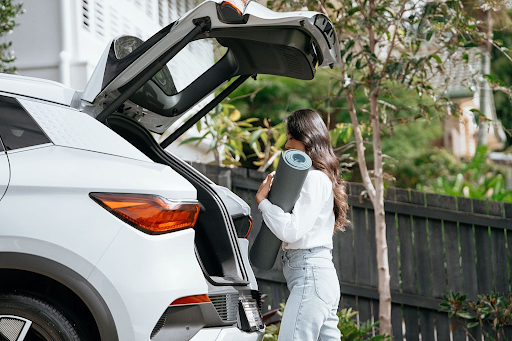 What hasn’t changed, and this is probably the finding that tells you most about Australian character in this whole dataset, is the expectation around who organises the pickup. About one in three Australians expected the date’s organiser to come and get them, in both February and April, without variation. The expectation of effort remained entirely constant. The geography of that effort has simply been compressed into a shorter, more fuel-efficient expression of the same underlying intention.
If you are inside the perfect relationship pool right now in 2026, this information may be on things that are not just exciting but honestly realistic. A strong starting message is more important than when someone probably pushed for forty-five minutes just to see what you were like over a tumbler of wine in person. Proximity is now a true asset worth bringing into hiding. It’s not just a nice touch to point out somewhere better and easier for the opposite; It’s an increasing number of strategic flows that determine whether or not a date must happen.
The radius is smaller than in the previous eight weeks. The desire to connect with a new person has not changed at all. If anything, the bar has quietly risen to convince someone to move to the limits of modern times, which means that the first impact, exceptional to the communication that precedes the meeting, carries more weight than before. Less geography to work with. All the more reason to make it another whole lot of greatness.
Study Techniques for Busy Mums: Maximising Productivity in Limited Time


