
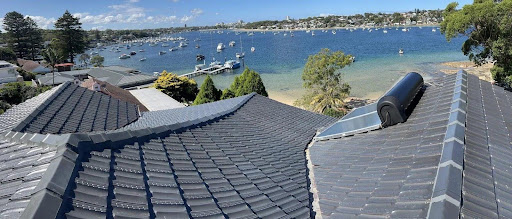
Spring is the window between the winter rain and the summer storms, and it is the one time of year when a quick look at the roof can save a big bill in December. Sydney’s eastern suburbs are harder on roofs than most of the city. Salt air, wind straight off the ocean, big old trees and a lot of housing stock that is 60 to 100 years old all add up to roofs that need a check more often than the same house would out west.
Here is what to look at, what you can do yourself, and when to call someone.
Start from the ground
You do not need to climb a ladder to catch most problems. Walk around the house on a clear morning and look up.
- Ridge capping. The tiles along the very top and the hips. If the mortar looks crumbly, has gaps, or there are chips of cement in the gutter or on the ground, the bedding is failing. This is the most common leak point on tiled roofs across the east.
- Slipped or cracked tiles. Look for a tile sitting lower than its neighbours, or a dark patch where one has cracked. One broken tile lets water straight onto the timber underneath.
- Moss and lichen. Common on south facing sides in Coogee, Clovelly and Bronte where the roof never fully dries. It holds water against the tile and shortens its life.
- Rust on metal. Colorbond and older galvanised roofs near the coast rust from the edges first. Check the gutter line, the valleys and around any flashing.
Inside the house
Go into the roof space with a torch, or if you cannot get up there, check the ceilings in every room and the top of every cupboard on an outside wall. You are looking for:
- Brown rings or stains on ceilings, even faint ones
- Bubbling paint or a ceiling that looks slightly bowed
- Daylight showing through the roof when you are in the roof cavity
- A musty smell that was not there in autumn
A stain that has been there for years and has not grown is usually an old repair that worked. A stain that is bigger than it was in winter is a live leak.
Gutters and downpipes
Blocked gutters cause more ceiling damage in the east than roof leaks do. Water backs up under the tiles and into the eaves. With the amount of fig, jacaranda and gum litter around here, most homes need gutters cleared at least twice a year, and homes under big trees need it every season.
While you are there, run a hose into the gutter and watch where the water goes. If a downpipe overflows at the top, it is blocked below. If water pools in the gutter, the fall is wrong or the brackets have dropped.
What is a fair price to fix it
This is where a lot of families get caught. A roofer turns up, says the whole roof needs doing, and quotes $30,000 with no way for you to check.
Get a second opinion, and go in knowing the rough numbers. Rebedding and repointing ridge capping usually runs from about $1,500 to $4,000 depending on how many metres of ridge you have. A leak repair on a tiled roof, including replacing rotted battens and sarking under the affected section, is typically $3,000 to $10,000. A full re-roof is the big one, and the price depends almost entirely on roof area and material.
For that last one there is a free tool that takes some of the guesswork out. The roof replacement cost calculator measures your roof from satellite imagery when you enter the address, then gives an estimate for Colorbond, concrete tile or terracotta at current Sydney rates. It is not a quote, but it tells you whether the $30,000 figure is in the right ballpark or double what it should be before you sign anything.
When to call someone
- Any active leak, obviously
- Ridge capping you can see is cracked or missing pieces
- Sagging anywhere along the roofline, which can mean rotted timber
- Rust holes in a metal roof, not just surface rust
- A roof that has not been looked at in more than five years on a house built before 1970
Ask for photos of what they find. Any decent roofer will send you pictures of the problem from up on the roof before they send you a quote. If they will not, find another one.
The five minute version
Walk around the house and look up. Check the ceilings. Clear the gutters. Know the rough prices before anyone gives you a quote. Do it in September or October, before the first big storm rather than after.
Creating a Home That Works for Your Family: Practical Updates That Make All the Difference


